Montreal’s 2026 Draft Class – HabsWorld.net
HabsWorld.net —
The dust has largely settled on Montreal’s offseason, or so it seems, at least. With that in mind, it’s time to take a closer look at their 2026 draft class.
I wanted to take some time after the draft to get a better feel for who Montreal selected, especially since the prospect rankings are returning this summer. Rather than do grades as we used to do, let’s instead go over some general thoughts on their newest prospects and their draft as a whole.
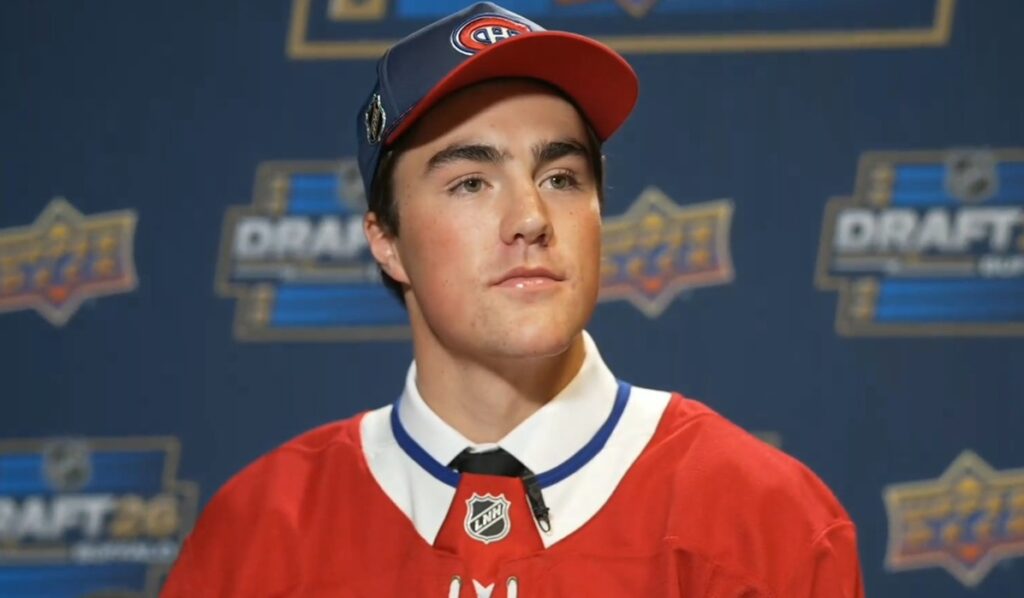
1) Gleb Pugachyov, 26th Overall: It has been a few years since Montreal’s first-round pick had some controversy. Yes, Pugachyov was rated below 26th by a lot of public rankings but at the same time, we know scouting Russia isn’t easy. Many NHL teams struggle to get eyes in there so we know independent scouts probably aren’t having an easier time. With that in mind, I’m not concerned about the pick being a reach based on the rankings. And if the Habs had him well above 26th on their list, flipping a 2027 third-rounder to make sure they get him is defensible.
There is definitely some risk here but the fact Pugachyov’s floor is a role the Habs lack helps to insulate it somewhat. They clearly think he has top-six upside. A couple of years in the KHL could help develop those skills. But his defensive awareness (he was a defenceman early in his career) and physicality are attributes that make him a seamless fit in the bottom six. Barring injuries, Pugachyov should have a role in Montreal’s lineup, probably fairly quickly given how filled out he is already. If he can be a top-six piece, this should be a great pick. If not, he can still contribute but a lower-lineup outcome on a first-round pick wouldn’t be great by any stretch.
2) Timofei Runtso, 57th Overall: It’s fair to say this pick was more controversial, given that the defenceman wasn’t picked last year and the Habs traded up to get him. But that overlooks the fact that Runtso took huge strides in his development, thriving in a much more competitive league (WHL) compared to his draft year (NAHL). He’s big, a strong skater, and has a lot of offensive skill while being a right-hand shot. There’s a lot to like here once you look past the second year of eligibility part. Montreal has an intriguing track record with blueliners not picked in their first year, including Adam Engstrom and Bryce Pickford, players who have some similar attributes to Runtso. There’s a reason he was believed to be in Montreal’s top 32 on their draft board.
3) Cooper Cleaves, 93rd Overall: This selection was even less popular on draft day, given that it was his third year of eligibility, something this management group hasn’t shied away from among defenders (look no further than Bogdan Konyushkov). They had him at development camp last year and he also stood out more at a higher level, going from the USHL to the NCAA. If you were to ask Montreal’s coaching staff about the profile of player they’d like on the third pairing, it would be someone who is defensively reliable, a good skater, and brings some grit to the table. Cleaves checks the first and third boxes and if his skating comes around, he could fit the bill as a third-pairing player. This pick isn’t a swing for upside but he’s the type of player Montreal is going to want to sign over the next few years. That said, I had him pegged to go a couple of rounds lower than this.
4) Brayden Klimpke, 117th Overall: Young blueliners aren’t always the most reliable on a consistent basis but that’s one element Klimpke has. He’s a great skater, can log big minutes, and is solid defensively. At this point of the draft, that’s not bad, although he’s a bit on the smaller side with a skill game that might not have a ton of projection. He profiles as more of a solid AHL defender than someone with NHL upside although he’ll be taking the slower development route through college. After some riskier selections, this was certainly a safer pick.
5) Parker Trottier, 189th Overall: In the sixth round, you’re not necessarily looking for skill players and this was an example of that. Trottier is an effective energy player who is reliable defensively. But he hasn’t been scoring much in his age group and players usually don’t go from bottom-six checkers to scorers as they progress through levels. That said, we’ve seen in the playoffs how an effective energy player becomes even more important. If all went well, Trottier could have a shot at filling that role.
6) Wesley Royston, 190th Overall: A couple of years ago, the Habs took a flyer on winger Tyler Thorpe with the hopes that he could develop into a big, physical checker. Royston is another pick along those lines although the two players are largely opposite. Royston is quick but his skill set is limited. Conversely, Thorpe is much slower but has some skill, allowing him to be productive in junior. Could there be a fourth-line crash-and-bang profile here? Given how fast the Habs like to play, Royston’s skating will help his cause but his play with the puck is going to need to get a lot better for that to happen.
7) Jean-Samuel Daigneault, 221st Overall: By the time this pick came on draft day, it was painfully evident that physicality was being targeted. Daigneault might be the most physical of them all although the rest of his game has a long way to go. Earlier in this piece, I mentioned that Runtso and Cleaves moving to higher levels brought out big improvements in their game. Daigneault will have that chance as he goes to a good program in Brantford. If he can lock down a regular role with the Bulldogs this coming season, a bit of upside could emerge from this selection.
8) Tyler Deakos, 224th Overall: It took until literally the last pick of the draft for the Habs to target a bit of offence. Deakos has battled injuries but he’s a quality puckhandler with a strong shot. He’s another player jumping to a better level for the upcoming season (he’s WHL-bound) and another one of those ‘draft him now over maybe needing a higher pick to take him next year’ selections. The Habs have been hit or miss with these in recent years but this is a reasonable skill set to take a flyer on.
9) Trades: The Habs made five pick trades in the draft. I already covered the first in the Pugachyov write-up, a reasonable price to pay to make sure you get your guy, especially with the Flyers, a team also prioritizing size and physicality, picking before you otherwise. Let’s quickly look at the other four:
– Habs acquire Pick 57 for Picks 61 and 125. A late fourth to move up four spots in the second round is reasonable.
– Habs acquire Picks 113 and 190 for Pick 103. A late sixth to move down ten spots in the fourth round seems a little light but not terrible. By comparison, Pick 102 went for 131 and 148. Something like that might have been nicer than how things went overall.
– Habs acquire Picks 117 and 223 for Pick 113. That’s a pretty boring return overall but if they were convinced Klimpke was going to fall, then it’s okay in that something is better than nothing. But if they lost who their target was to add the second-last pick in the draft, ouch.
– Habs trade Pick 223 to Los Angeles for their 2027 seventh-rounder. Value-wise, it’s hard to think they’ll lose as I don’t think the Kings are winning next year’s Stanley Cup. And with them moving the 2027 third in the Pugachyov trade, getting another pick to get them back to seven in that draft isn’t bad.
10) Overall Assessment: I’m a big believer in looking for BPA over searching for a type. I can be sold on the Habs believing Pugachyov and Runtso were BPA on their board but I feel like they went away from that a bit the rest of the way to make sure they got their specific need filled.
I get targeting physicality given that it’s an organizational weakness but you can still do that and not completely shy away from more of a skilled player until the final pick of the draft. Yes, the Habs may have their top six largely set before long but by the time most of these players could be NHL-ready, a lot could have changed.
The typical line is that a team needs two players to make it to the NHL for a draft class to be successful. Pugachyov feels like a very safe bet to get there and Runtso has a chance as well. Maybe Cleaves if his skating takes some steps forward. But when you’re targeting physicality over skill, there are bound to be some straight-up misses out of the rest of the group. Time will tell if they can get to the magic number. I think they can, but this probably isn’t going to be a highly impactful draft class overall, at least compared to some of their other ones. But that’s also to be expected with their picks being much later than they were in those other years.