Chicago Blackhawks’ 5 Best & Worst Contracts of the Salary Cap Era – The Hockey Writers – Chicago Blackhawks
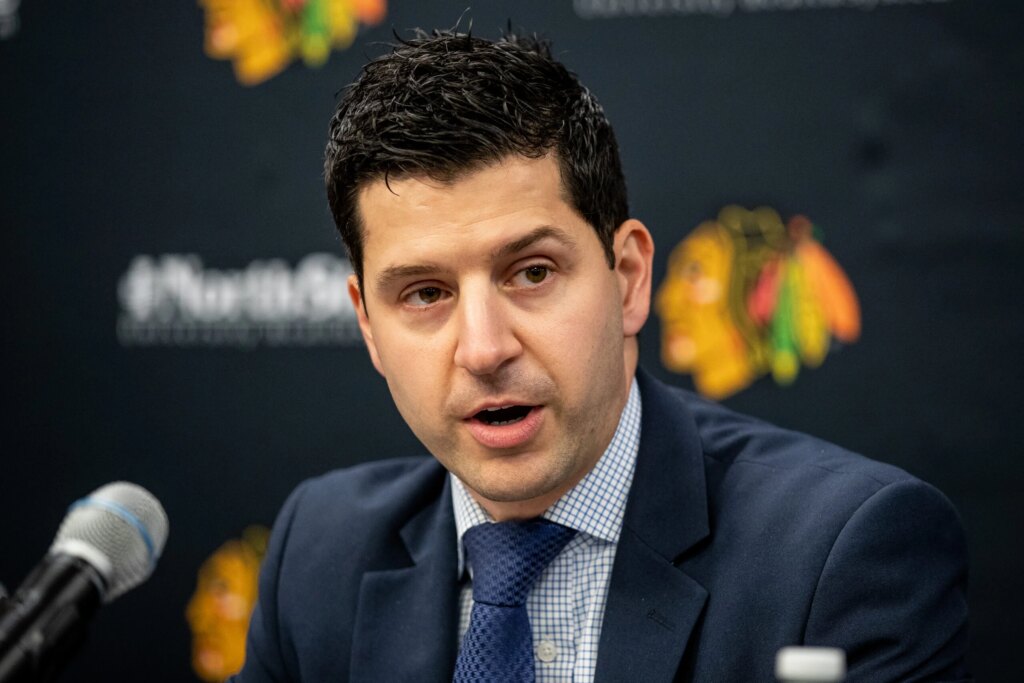
Over the years, the Chicago Blackhawks have had some contracts that worked out really well, while others turned into questionable signings that left fans wondering what management was thinking. Here’s a list of the five best and five worst Blackhawks contracts of the salary-cap era.
Blackhawks’ Five Best Contracts
#5: Artemi Panarin
Artemi Panarin was an undrafted prospect out of the Kontinental Hockey League when he signed a two-year, $7 million deal in 2015. His cap hit was $3.5 million annually after a couple of high-scoring seasons with SKA Saint Petersburg.
It’s always a risk to sign an undrafted prospect, but Panarin was a KHL All-Star who became an NHL All-Star. He scored 151 points (61 goals, 90 assists) in two seasons with Chicago before he was traded to the Columbus Blue Jackets.
#4: Corey Crawford
After helping the Hawks win the 2013 Stanley Cup, Corey Crawford signed a six-year, $36 million contract with a cap hit of $6 million.
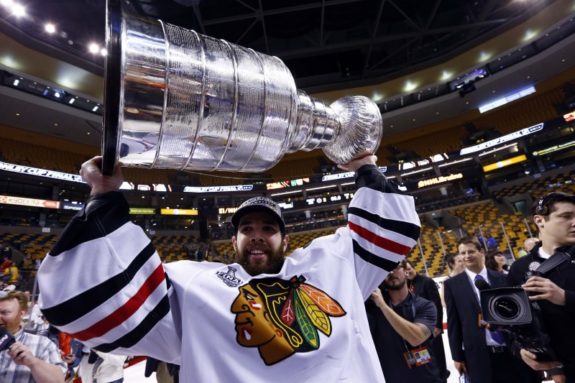
Goaltending is tough to predict, but Chicago got this one right. Even with injury concerns, his value to the team was enough to consider this contract a big success.
He had already established himself as a Stanley Cup-winning goaltender by the time he landed in Chicago, but the contract still carried some risk. Crawford justified the risk, winning two Stanley Cups with the organization and becoming the best goaltender in franchise history. His consistency was especially valuable when the Blackhawks’ stars were carrying a large portion of the team’s payroll.
#3: Patrick Kane
From 2010-11 through 2014-15, Kane carried a $6.3 million annual cap hit as he became one of the NHL’s premier offensive players and won three Stanley Cups with the team during that span.
His five-year, $31.5 million contract gave Chicago superstar production while his cap hit remained relatively manageable, giving management the flexibility to surround Kane, Jonathan Toews, Duncan Keith and others with enough depth to win. This contract was arguably one of the best bargains for a superstar in the NHL.
#2: Duncan Keith
Duncan Keith’s 13-year, $72 million contract (worth roughly $5.5 million annually) was one of the best contracts in franchise history for a future Hall of Famer.
Keith became the cornerstone of Chicago’s defense during their dynasty years, winning the Norris Trophy, capturing three Stanley Cups and establishing himself as one of the greatest defensemen of his generation. His cap hit was particularly valuable because Keith routinely played above his cost.
The contract eventually became an issue as Keith aged, but that doesn’t erase what Chicago received during the most important years of the deal.
#1: Marian Hossa
At 12 years and $62.8 million, this was a prime example of how contract structure could be used in the pre-CBA-correction era. Hossa signed his 12-year deal in 2009, carrying a relatively modest $5.275 million cap hit. Without committing an enormous percentage of the salary cap to him, Hossa’s contract gave the Blackhawks room to add an elite winger while providing elite offensive production.
Hossa scored 40 goals in his first season with Chicago and became an important two-way player throughout the dynasty years. He won three Stanley Cups with the Blackhawks.
Yes, the back end of the contract became complicated because of Hossa’s health and eventual retirement. But for the period that mattered most, Chicago had an elite winger at a very manageable cost.
Blackhawks’ Five Worst Contracts
#5: Bryan Bickell
Most people remember that Bryan Bickell became a playoff hero during Chicago’s 2013 championship run, scoring nine goals and establishing himself as a valuable power forward. Management rewarded him with a four-year extension worth $16 million. Unfortunately, his production dropped almost immediately. Bickell scored only 14 goals and 28 points in 2013-14, then never came close to replicating his 2013 Playoff form.
The contract became so problematic that Chicago had to move him in the Andrew Ladd trade in 2016. Bickell was diagnosed with multiple sclerosis in November 2016, ending his playing career. In 2017, he signed a one-day contract to retire a Blackhawk.
#4: Patrick Sharp
Patrick Sharp’s five-year, $29.5 million contract signed in 2012 was supposed to give the team consistent bottom-six scoring from a skilled winger. Sharp was a fan favorite during his time in Chicago, but in the first year of his deal, he only played 20 games. The second year was slightly better, but after that, it became clear he wasn’t worth $5.9 million a year.
#3: Brent Seabrook
Yes, Brent Seabrook is a Blackhawks legend. Yes, he did a lot for the franchise. But everyone felt the risk of his long-term deal because of his age at the time, and they were right. Seabrook signed an eight-year, $55 million contract with a cap hit of $6.875 million in 2015. The team was betting that he would continue playing at a top-four level well into his 30s. But that didn’t happen.
His performance declined, injuries mounted, and his contract became increasingly difficult for Chicago to move. By the end, Seabrook could not play anywhere near his cap hit. He ultimately retired in 2021 after being limited by injuries, but the contract continued to affect Chicago’s cap structure until it expired after the 2023-24 season.
#2: Jonathan Toews
Like Seabrook, Toews’ contract extension was considered problematic because of the timing and its length. He signed an eight-year, $84 million extension in 2014 when he was 26 years old. His $10.5 million cap hit tied him with Kane as the biggest annual cap hit in the NHL at the time. The deal made sense at the time, but it became increasingly problematic as he aged.
Toews was the captain of three Stanley Cup teams. He won the Conn Smythe Trophy in 2010. He was one of the best two-way centers in hockey for years. He was worth an enormous contract in his prime. However, his offensive production declined, injuries became a bigger concern, and Chicago’s roster became increasingly dependent on inexpensive young players to make up for the enormous cap space tied up in its veteran core.
The contract didn’t suddenly become bad. Toews eventually stopped providing $10.5 million worth of value, and because the deal carried a full no-movement clause, Chicago had no flexibility to solve the problem. Toews’ legacy in Chicago remains unquestionably positive. The contract does not.
#1: Seth Jones
Seth Jones was a talented offensive defenseman, averaging 41 points per season from 2017-2021 before Chicago traded for him. However, the Blackhawks didn’t see enough of that offense.
In the summer of 2021, Jones signed an eight-year, $76 million deal with a $9.5 million annual cap hit to stay in Chicago and become the centerpiece of the team’s defense. Instead, the Blackhawks entered a rebuild, which made the contract particularly problematic.
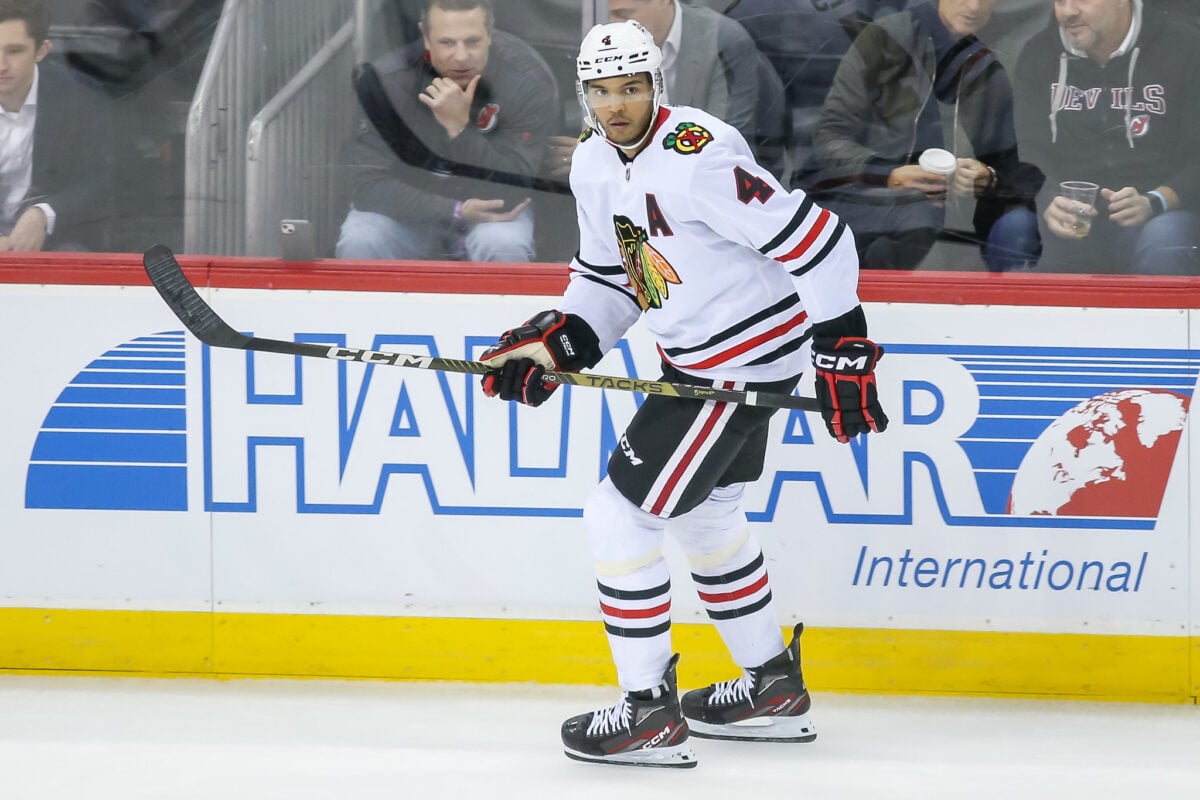
In late February 2025, Jones requested a trade, and on March 1, he was traded to the Florida Panthers for Spencer Knight. The Blackhawks retained salary to move Jones, keeping $2.5 million in annual retained salary on the books through 2029-30. Chicago wasn’t simply paying a defenseman $9.5 million; they were committing money to a player during years in which the team desperately needed cap flexibility to rebuild.
For the most part, NHL contracts have a 50/50 shot of working out. The ones that did work out made the Hawks an electric team to watch. The ones that didn’t still leave questions about whether or not they were worth it at the time of signing.
Free Newsletter
Get Chicago Blackhawks coverage delivered to your inbox
In-depth analysis, breaking news, and insider takes – free.