Canadiens’ Russian Pipeline May Be the Missing Piece of a Championship Roster – The Hockey Writers –
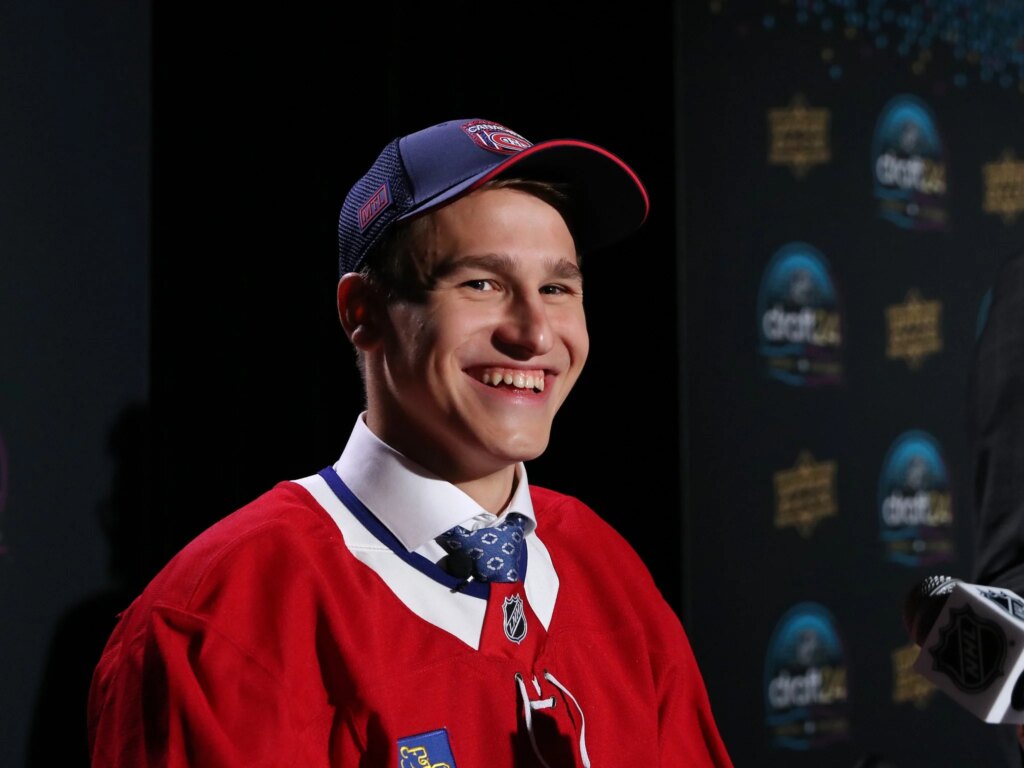
Since Russia invaded Ukraine in February 2022, the NHL Draft’s first round has seen few Russian and Belarusian names called. Across the five drafts from 2022 through 2026, only about a dozen Russian-developed players were selected in the first round, averaging roughly two per year. The lack of representation extends beyond the draft, as many NHL teams carry fewer than two Russian players on average. A few have three, while some have none at all.
Evaluating Russian prospects has never been straightforward. Long before the war in Ukraine, NHL teams had to navigate political realities, an often protective Kontinental Hockey League (KHL), and limited opportunities to build relationships or scout players extensively. Since 2022, those challenges have grown. Russia has been excluded from international tournaments such as the Winter Olympics, the World Juniors and the Hlinka Gretzky Cup, while many NHL clubs have sharply reduced scouting trips there. That has left organizations with fewer opportunities to evaluate prospects firsthand.
That is where Montreal has set themselves apart. Rather than reducing its investment in Russia, the Canadiens have spent the past three drafts building on relationships that were already years in the making. Led by co-director of amateur scouting Nick Bobrov, the organization has turned one of hockey’s most difficult scouting markets into a potential competitive advantage, something somewhat reminiscent of the Detroit Red Wings teams of the late 1990s and early 2000s.
Bobrov’s Network: A 20 Year Head Start
Born in St. Petersburg, Bobrov has spent over two decades inside Russian hockey. He served as director of European scouting for the Boston Bruins from 2001 to 2006 and the New York Rangers from 2015 to 2021. Between those NHL stops, he worked as director of North American scouting for SKA St. Petersburg in the KHL. Few NHL scouts have worked both sides of that relationship, giving Montreal an advantage few organizations can match. It’s no coincidence Bobrov is in Montreal. He worked alongside Jeff Gorton in Boston and New York before Gorton brought him to the Canadiens in 2022, making Bobrov’s specialized knowledge more valuable.
Martin Lapointe, Montreal’s director of player personnel and Bobrov’s fellow co-director of amateur scouting, has credited Bobrov’s network as a competitive advantage. He told TVA Sports that the information Bobrov provides on Russian prospects is something many rival organizations lack. That access allows Montreal to evaluate players with a level of confidence other teams often cannot.
The clearest example came in December 2024, when general manager Kent Hughes, Bobrov, and special advisor Vincent Lecavalier travelled to St. Petersburg to watch Ivan Demidov play for SKA. They were reportedly the first NHL front office to visit Russia since the invasion began. The trip included a face-to-face meeting with SKA head coach Roman Rotenberg, who also serves as first vice president of the Russian Ice Hockey Federation. Hughes later said those relationships helped secure Demidov’s early release from his KHL contract, allowing Montreal to sign him months ahead of schedule.

Another example may have come at the 2023 Draft. Montreal passed on Matvei Michkov despite holding the fifth overall pick. Some reports suggested Bobrov’s assessment of Michkov’s makeup differed from public perception of the highly touted winger. Two years later, after a sophomore season in Philadelphia marked by conditioning concerns and a reduced role, that speculation appears more credible. Whether it proves correct or not, it highlights the value of Bobrov’s network. His advantage is not just finding players other teams cannot see, but evaluating them with information few organizations possess.
The Pipeline Runs Deeper Than Demidov
Demidov’s outstanding rookie season has dominated the headlines, but he is far from an isolated investment. Montreal has used its first selection on a Russian player in three consecutive drafts, underscoring how central this strategy has become. Demidov, selected fifth overall in 2024, already looks like a franchise cornerstone. He finished second in Calder Trophy voting in 2025-26 after recording 62 points, including 19 goals and 43 assists, in 82 games. Earlier this month, he signed an eight-year, $73.2 million contract extension.
Alexander Zharovsky was selected 34th overall the following year, in 2025, after Montreal traded up to acquire him, betting on what many scouts considered some of the best puck-handling skills in the draft. Zharovsky then went on to win the KHL Rookie of the Year, scoring 16 goals and adding 26 assists in 59 games.
Continuing this growing trend, Montreal traded up again to draft Russian player Gleb Pugachyov 26th overall in 2026 after moving up from No. 28. Bobrov reportedly became convinced after watching him in person at the U18 Russian Challenge in St. Petersburg. Former Canadiens scout Grant McCagg recently described him as having the potential to become an elite shutdown forward in the NHL because of how well he thinks the game away from the puck.
Bogdan Konyushkov, selected in the fourth round in 2023, recently signed a two-year entry-level contract after producing 38 points with Torpedo Nizhny Novgorod in the KHL. Dobber Prospects described him this way: “Konyushkov exudes skill and creativity and plays with enticing physicality despite being undersized. If he ever comes to North America, he could be a top four NHL piece.” He will spend another season in Russia before becoming eligible to join either Montreal or the Laval Rocket, where he could eventually challenge for a regular NHL role.

Yevgeni Volokhin, a fifth-round pick in that same 2023 Draft, has quietly emerged as one of Russia’s more intriguing goaltending prospects, earning comparisons to a young Igor Shesterkin because of his dominant numbers in the VHL. Under contract through 2028, he remains in regular contact with Bobrov for coaching and mental game advice, another indication of the close relationships Bobrov continues to build with these prospects.
Several other Russian prospects remain in the system (Alexander Gordin, Makar Khanin, Dmitri Kostenko, and Danill Sobolev), reinforcing the point that this is not a collection of isolated draft picks but an organizational strategy.
Could Montreal Reach Four Again, and Keep Them Together?
This is where the current pipeline becomes particularly interesting. Demidov is already in Montreal, while Zharovsky, Konyushkov, and Pugachyov are all on defined development paths. If everything goes according to plan, the Canadiens could realistically ice four Russian players at the same time within the next two or three seasons. Volokhin and the organization’s deeper prospect pool could provide additional reinforcements behind them.
That is the key difference from the groups Montreal assembled in the past. Those rosters were built around established veterans such as Alex Kovalev and Andrei Markov, complemented by Alexei Emelin, and short-term additions such as Alexander Radulov and Ilya Kovalchuk near the end of his career. This group, by contrast, is being built intentionally through the draft, with young players developing along staggered but converging timelines under the same scouting philosophy.
Echoes of Detroit
Comparing Montreal’s emerging Russian pipeline to Detroit’s legendary “Russian Five” is more about philosophy than personnel. The Red Wings built part of their dynasty by embracing Soviet- and Russian-trained players long before most NHL teams were willing to do the same. Sergei Fedorov, Vyacheslav Kozlov, Vladimir Konstantinov, Igor Larionov, and Slava Fetisov formed the famous Russian Five, helping Detroit win consecutive Stanley Cups in 1997 and 1998.
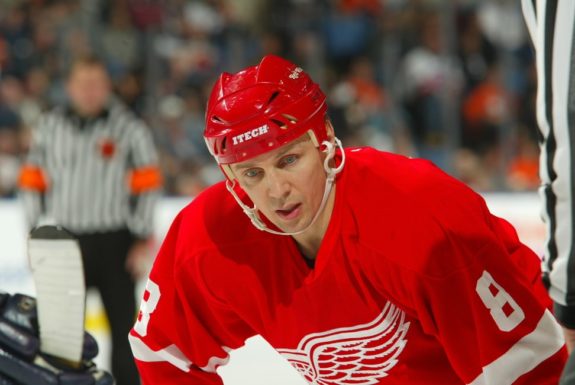
The organization continued to benefit from that philosophy in later championship seasons, with players such as Pavel Datsyuk. Not that Montreal’s prospects will become another Russian Five, but that the Canadiens appear willing to invest in a talent pool many organizations still approach cautiously, and that willingness is the point. Detroit had Jim Devellano and Scotty Bowman identifying an inefficiency in the market and exploiting it before the rest of the league caught up. Montreal may now have Bobrov doing something similar under different circumstances.
The Long-Term Payoff
None of this guarantees success. Prospect development is unpredictable, injuries happen, and not every standout from Russia’s MHL or KHL becomes an NHL regular. Montreal’s own experience with Nikita Scherbak is a reminder of that.
What appears real is the structural advantage the Canadiens have created. While many NHL teams remain hesitant to scout Russia extensively, Bobrov has spent years building relationships, gathering information, and drafting players others have been reluctant to pursue. That advantage extends beyond identifying talent. It allows the organization to evaluate players with greater confidence and maintain relationships long before they arrive in North America.
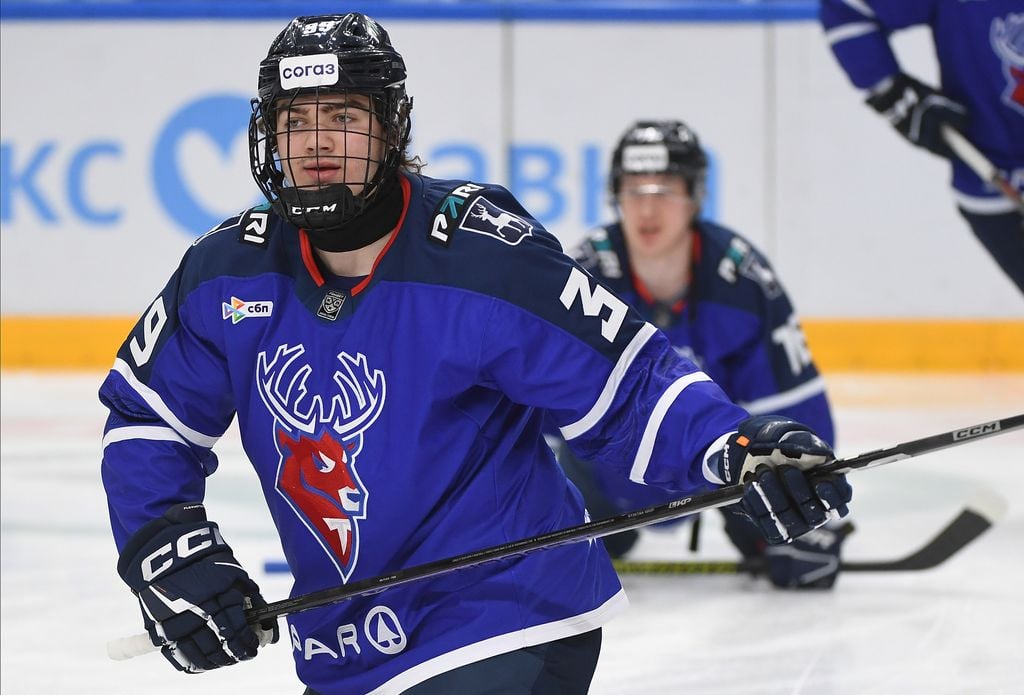
If this group reaches its potential, Montreal could soon have its first sustained core of Russian players since 2007 through 2009. This time, the nucleus would feature Demidov, Zharovsky, Konyushkov, and Pugachyov, with Volokhin potentially developing into a long-term solution in goal. Whether that strategy ultimately produces a Stanley Cup remains to be seen. But if it does, Bobrov’s greatest contribution may not be identifying a franchise player. He may ultimately be remembered for delivering the final pieces of the Canadiens’ next championship team.
Free Newsletter
Get Canadiens Prospects coverage delivered to your inbox
In-depth analysis, breaking news, and insider takes – free.