3 Oilers Training Camp Battles to Watch in 2026-27 – The Hockey Writers – Edmonton Oilers

The Edmonton Oilers will have less time than usual to settle several important training camp battles before the 2026-27 season begins. Edmonton has only four preseason games scheduled between Sept. 19 and Sept. 26, creating a condensed evaluation period for a roster with legitimate competition at forward, defense, and in goal.
The shortened schedule will make every opportunity more meaningful. OilersNation noted that veterans with more than 100 NHL games are expected to appear in a maximum of two preseason contests, leaving new head coach Mike Babcock and his staff with limited opportunities to evaluate combinations before Edmonton opens the regular season Sept. 29 against the Vancouver Canucks.
The Oilers’ preseason schedule includes two games against the Winnipeg Jets followed by matchups with Vancouver and Calgary. By the end of those eight days, Edmonton should have a much clearer picture of its bottom six, defensive hierarchy and unusual three-goaltender situation.
1. Dach and Samanski Lead Oilers’ Bottom-Six Battle
Edmonton’s stars are established, but the final few forward positions remain much less certain. Colton Dach and Josh Samanski showed enough late last season to make strong cases for regular jobs, while Mattias Janmark, Mathieu Joseph, and Max Jones give Babcock several veteran alternatives.
Colton Dach might have the strongest case entering camp. Edmonton acquired the 23-year-old from Chicago at the 2026 Trade Deadline, and he produced two goals and four points in only eight regular-season appearances with the Oilers while bringing a physical element the bottom six had lacked.
His overall season included 219 hits in 61 games, placing him among the league leaders despite missing significant time. Edmonton rewarded that production with a two-year contract carrying a $1.2 million average annual value (AAV), giving the organization an inexpensive young forward who should receive every opportunity to remain in the lineup.
Samanski’s path has been even less conventional. He began last season with the Bakersfield Condors before earning repeated NHL recalls, eventually becoming a regular late in the season and appearing in five playoff games against Anaheim.
His ability to play center gives him an advantage in the competition. Edmonton needs lineup flexibility, and Samanski can provide defensive responsibility without occupying much cap space while continuing to develop at 24 years old.
THW’s very early roster projection placed Dach and Samanski together on the fourth line with Trent Frederic. The same projection identified Janmark, Joseph, and Jones as players competing for work, which makes the bottom of Edmonton’s forward group one of the clearest battles entering camp.
Joseph may be the most dangerous challenger. The Oilers signed him as part of their busy opening to free agency, and his NHL experience, speed and penalty-killing ability give Babcock another versatile option. Edmonton’s offseason tracker also confirms that Janmark remains under contract through this season and Jones returned on a one-year deal.
Jones brings size and physicality similar to Dach. He recorded three goals and five points in 21 NHL games last season while splitting the year between Edmonton and Bakersfield, and his $850,000 contract makes him an inexpensive extra-forward option.
The difficult decision may involve experience versus upside. Janmark and Joseph have played hundreds of NHL games and can be trusted defensively, while Dach and Samanski offer younger legs and greater potential to grow into larger roles.
Babcock has already emphasized that Edmonton needs greater contributions from throughout its lineup instead of relying heavily on a handful of stars. Training camp will show whether that philosophy translates into giving Dach and Samanski permanent jobs or whether the new coach initially prefers the security provided by experienced veterans.
2. Shea, Mukhamadullin and Stastney Must Define Their Roles
Edmonton’s blue line has changed considerably, and the competition is less about one obvious roster opening than determining where several defensemen fit within the hierarchy. Ryan Shea enters with the largest commitment, while Shakir Mukhamadullin and Spencer Stastney will be trying to prove they deserve consistent appearances rather than time in the press box.
Shea should enter camp with an advantage after signing a five-year deal worth $4 million annually. He produced six goals and 35 points with a plus-30 rating for Pittsburgh last season, and Stan Bowman specifically praised his mobility, puck movement, and penalty killing after the signing.
The contract makes it difficult to envision Shea failing to make the opening-night lineup unless his camp goes disastrously. His larger competition will be proving where he belongs, whether that means remaining on the third pair or earning opportunities higher in the lineup.
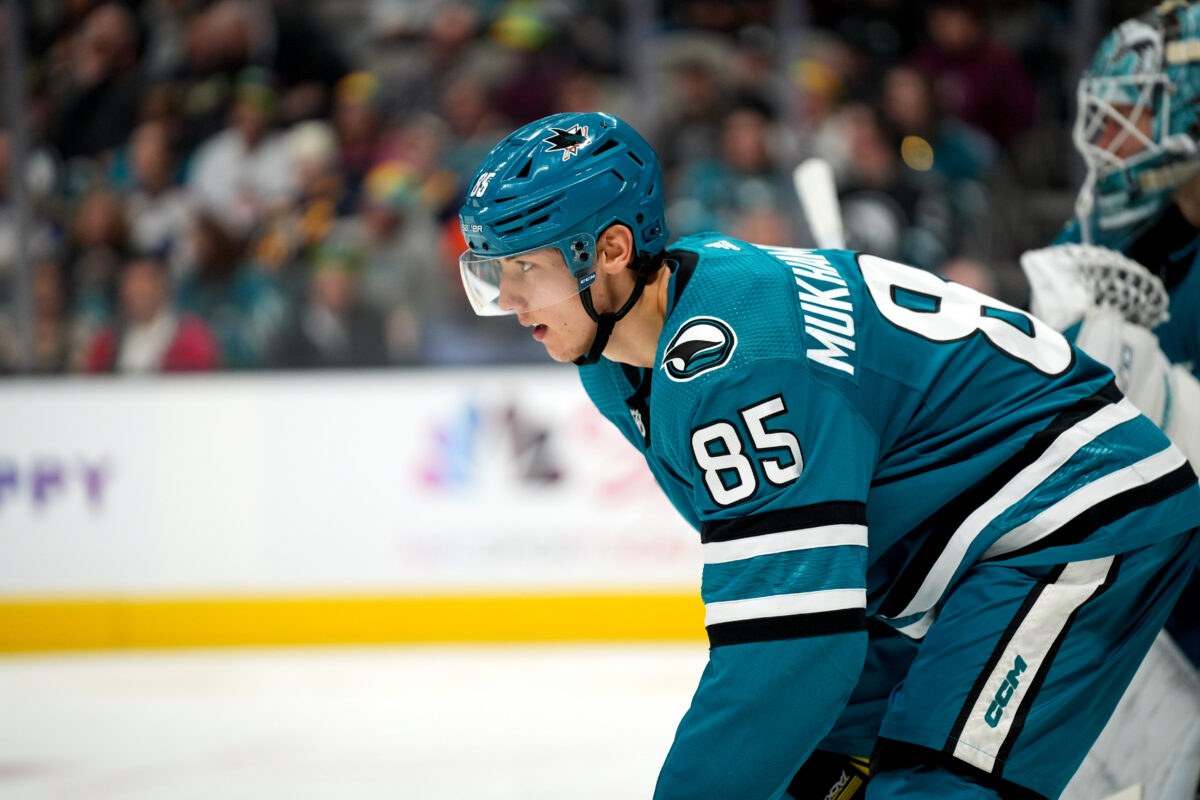
Mukhamadullin has more to establish. Edmonton acquired the 24 year old from San Jose in the Darnell Nurse trade, then signed him to a two-year deal with a $1.75 million AAV.
Mukhamadullin played 50 games for San Jose last season, recording five goals and 12 points while averaging 17:09. He also logged 70:02 on the penalty kill, giving Babcock and associate coach D.J. Smith another option for a unit Edmonton spent much of the offseason trying to improve.
Bowman has spoken positively about Mukhamadullin’s upside. In his free-agency comments, he highlighted the defenseman’s size, reach, shot, and ability to play either side while explaining why Edmonton wanted him as part of the Nurse return.
Stastney enters with less momentum but more familiarity with Edmonton. He appeared in 36 games for the Oilers last season and averaged 16:02 before falling out of the lineup late in the season, ultimately sitting for all six playoff games.
Edmonton nevertheless brought him back. The Oilers’ two extensions gave Mukhamadullin two years and Stastney one, ensuring both would arrive at camp with an opportunity to compete.
The shortened preseason makes their competition particularly interesting. Since Edmonton will have only four exhibition games and limited appearances for established veterans, meaning Shea, Mukhamadullin and Stastney cannot expect a long evaluation period before decisions are made.
Shea has the safest roster position, but Mukhamadullin could force his way into a larger role with a strong camp. Stastney must show that his skating and puck retrieval can outweigh the inconsistency that pushed him out of the lineup last spring.
Edmonton does not need to determine its permanent defensive order by opening night. It does need enough clarity to know which players Babcock trusts when the games begin to count.
3. Jarry, Andersen, and Levi Battle for the Oilers’ Crease
The most important Oilers training camp battle will take place in goal because Edmonton does not currently have an undisputed number one. Tristan Jarry returns after struggling badly following his trade from Pittsburgh, while Frederik Andersen and Devon Levi were added during the offseason to create legitimate competition.
Jarry has the largest cap hit of the three at $5.375 million, but his contract will not guarantee starts. He posted an .858 save percentage in 19 appearances for Edmonton last season and eventually lost playing time as the Oilers searched for more dependable options.
Bowman responded aggressively, acquiring Levi from Buffalo on July 1 and adding Andersen shortly afterward on a one-year, $2.8 million contract, giving Babcock three goaltenders with dramatically different résumés.
Andersen brings the most experience and arrives immediately after helping the Carolina Hurricanes win the Stanley Cup. He has made clear that he no longer expects to handle a traditional workhorse schedule and told NHL.com that he was comfortable becoming part of a goalie rotation with Jarry and Levi.
Levi represents the opposite end of the equation. The 24-year-old has only 39 NHL appearances, but his American Hockey League (AHL) production convinced Edmonton that he is ready for a more substantial opportunity.
Bowman was particularly revealing when discussing the acquisition. He said Levi’s repeated success in the AHL indicated that the young goaltender was “ready to take the next step” and show what he could accomplish at the NHL level.
That does not mean Edmonton will immediately hand Levi the starting job. THW’s three-goalie system in 2026-27 outlined why keeping all three could make sense, particularly given Andersen and Jarry’s injury histories and Levi’s relative inexperience.
Training camp still matters because somebody must establish the initial hierarchy. Jarry needs to show that last season’s collapse was not his new standard, Andersen must demonstrate that he remains capable of giving Edmonton high-level starts at 36, and Levi has his first opportunity to prove that his AHL success translates against NHL shooters.
Only four preseason games complicate the evaluation. There are not enough starts to give all three goaltenders multiple complete games, meaning practice performance and partial-game appearances could carry more weight than they normally would.
Babcock does not necessarily need to name a traditional starter before opening night. Edmonton could distribute games based on performance and workload throughout the season, but the coaching staff will still leave camp with an initial level of trust in each goaltender.
That makes the crease competition more consequential than the other two battles. A fourth-line decision or sixth-defenseman rotation can change quickly without dramatically affecting Edmonton’s season, while unstable goaltending has the ability to undermine the entire roster.
Short Preseason Raises the Stakes for Edmonton
Training camp competitions often have weeks to develop, but Edmonton’s schedule will force decisions quickly. The Oilers play their first exhibition game Sept. 19 and finish the preseason only seven days later before opening the regular season against the Canucks on Sept. 29.
That timeline should create meaningful opportunities for players on the roster bubble. Dach and Samanski need to show Babcock that youth and upside outweigh the familiarity of Edmonton’s veteran forwards, while Mukhamadullin and Stastney must establish where they fit behind a defensive group containing several players with larger contracts and more NHL experience.
The goaltending battle carries even greater stakes. Edmonton deliberately created competition by adding Andersen and Levi rather than entering another season with Jarry’s role protected, and Bowman’s comments suggest the organization expects every member of the trio to push for NHL minutes.
Four preseason games will not provide definitive answers to every question. They should provide enough information for Babcock to make the first important decisions of his Oilers tenure, and Edmonton’s crowded roster means there will be little room for anyone to waste an opportunity.
Free Newsletter
Get Edmonton Oilers coverage delivered to your inbox
In-depth analysis, breaking news, and insider takes – free.