Hickey: Team Canada's Olympic goaltending appears less than golden
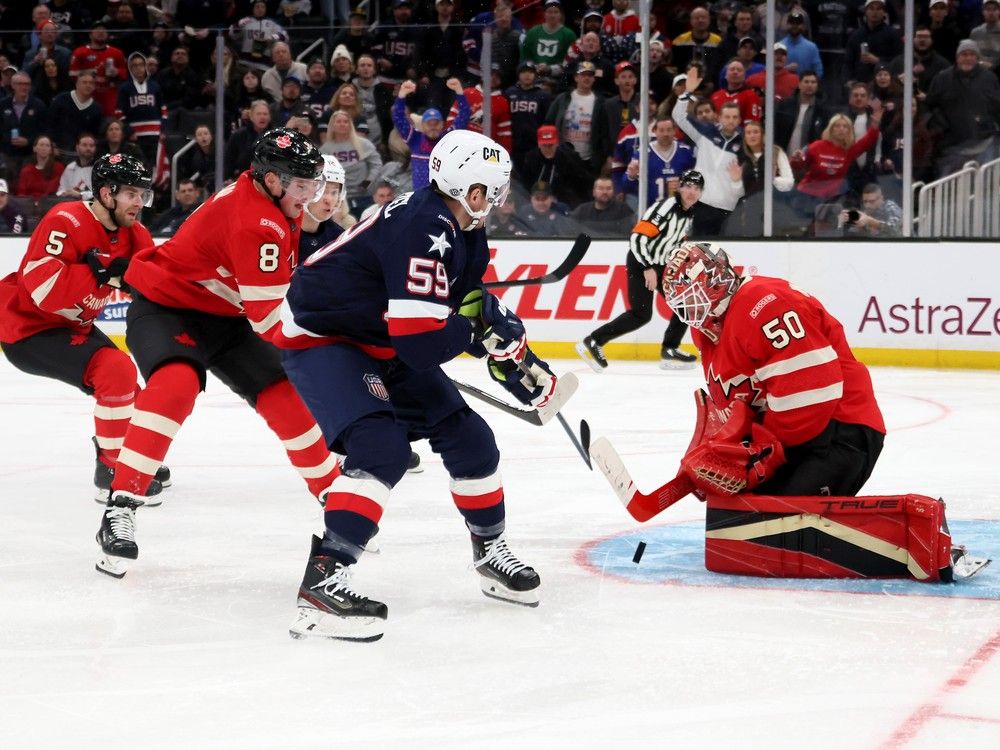
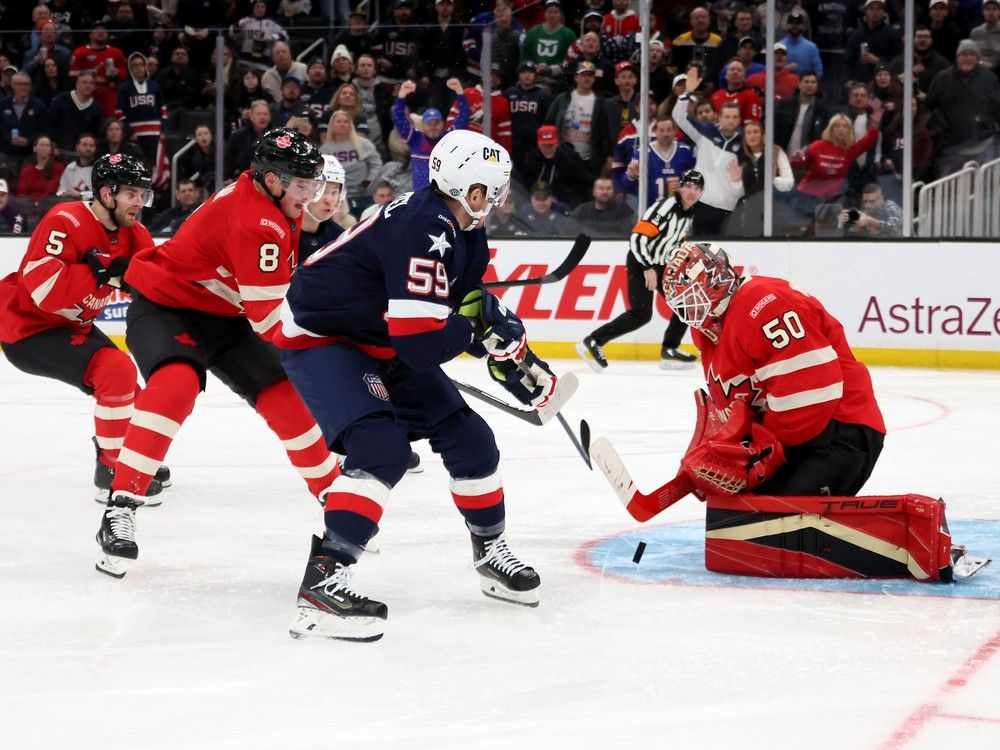
Take a look at the Team Canada roster, and you will understand why it’s favoured to win the gold medal at the Milano Cortina Olympics.
The high-powered offence is led by Connor McDavid, Nathan MacKinnon and Macklin Celebrini, who are 1-2-4, respectively, in the NHL scoring race. Ageless Sidney Crosby is seeking his third gold medal, as is defenceman Drew Doughty.
Two-time Norris Trophy winner Cale Makar is looking for his first along with Mitch Marner and Montreal’s own Nick Suzuki, who is putting together strong credentials for the Selke Trophy. How can this superstar lineup lose?
In a word: Goaltending.
If there’s a weakness for this team, it’s between the pipes. The three goaltenders — Logan Thompson, Darcy Kuemper and Jordan Binnington — have all lost more games than they’ve won this season. Thompson has the best numbers, but there are questions about his health — he returned from injured reserve and made 27 saves in Washington’s 4-2 win over Nashville on Thursday.
Head coach Jon Cooper’s decision on the No. 1 goaltender should come down to a choice between Thompson and Kuemper, who won a Stanley Cup with Colorado in 2022 and is having an okay season.
Binnington’s spot on the 25-man roster is a recognition of his performance in the 4 Nations Face-Off last year. He played all four games as Canada took the gold medal and he won the Stanley Cup with St. Louis in 2019. But Canada might pay a price for its loyalty because Binnington is having the worst season of his career, with only eight wins in 32 appearances. His 3.65 goals-against average ranks 58th in the NHL.
Cooper’s choice of a netminder could be crucial because he has no control over the other goaltender — the red-hot guy on the other end of the ice.
Canada won the gold medal at Sochi in 2014, the last time NHL players participated. Canada assembled another offensive juggernaut — Hall of Famer Martin St. Louis was relegated to the fourth line — and there were suggestions that it didn’t matter who was in goal.
The fact is that Canada needed Carey Price at his best. In a performance that might tip the scales for a place in the Hockey Hall of Fame, Price won the five games he started with a 0.59 GAA, a .972 save percentage and two shutouts. More importantly, three of his victories came in one-goal games.
In the preliminary round, Finland took Canada to overtime before losing 2-1 on Doughty’s second goal of the game. Tuukka Rask, who won the Vézina Trophy that season, kept Finland in the game with 27 saves.
Canada opened the medal round with a 2-1 win over Latvia. Head coach Ted Nolan received far too much credit for Latvia’s performance, but he did make the gutsy decision to start untested Kristers Gudlevskis in goal, and the 21-year-old Tampa Bay farmhand responded with a 55-save effort. Price faced only 16 shots, but he had no margin for error before Shea Weber scored the winning goal at 13:06 of the third period.
Price had another nailbiter in the semifinals, posting a 31-save 1-0 shutout win over the U.S., which got a 36-save performance from Jonathan Quick. In the final, Price made 24 saves as Canada blanked Sweden 3-0. Hall of Famer Henrik Lindqvist made 33 saves for Sweden. Price’s performance is all the more remarkable because he injured his knee in Sochi and was sidelined for nearly a month when he returned to Montreal.
A bit of Gudlevskis trivia:
The goalie made three appearances for the Lightning over three seasons, posting a 1-0-1 record with a 1.36 GAA and a .959 save percentage. That should have earned him a longer look, but Tampa Bay was set in goal with Ben Bishop and Andrei Vasilevskiy. Gudlevskis is the only player to play in the AHL, ECHL, NHL, Olympics and world championships in the same season.
Canada in rare underdog role:
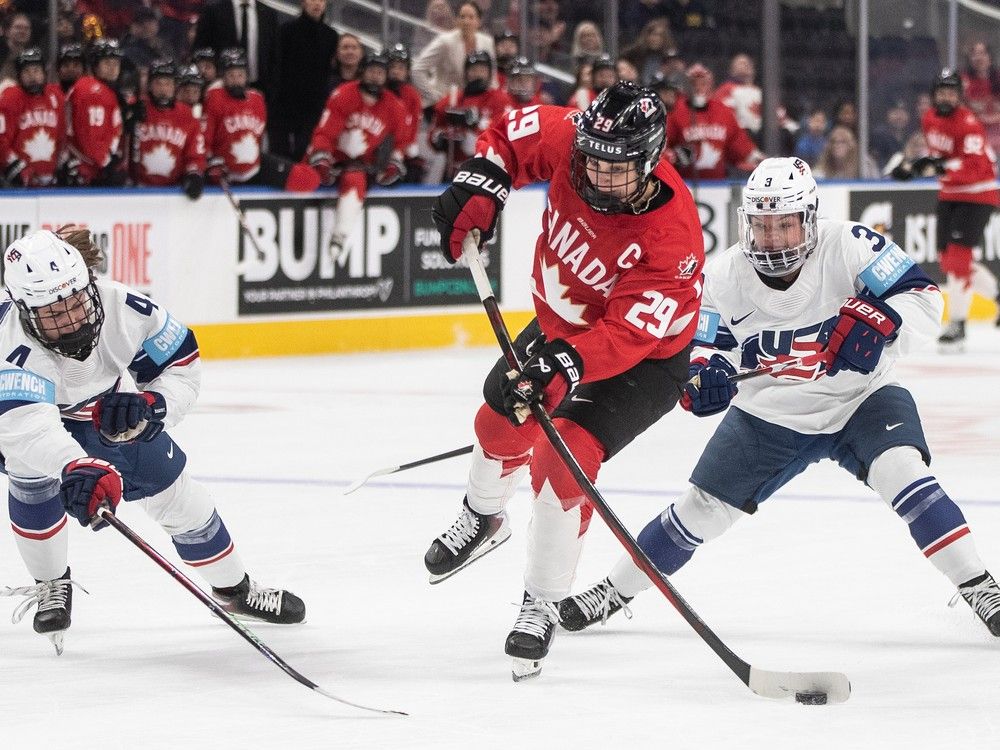
On the women’s side, Canada is the defending champion and has won five gold medals in seven tries since women’s hockey debuted in 1998. This time around, the U.S. is a solid favourite after sweeping the four-game Rivalry Series with a 17-goal margin over Canada.
While the PWHL has been great for women’s hockey, it has robbed Canada of one of its secret weapons. While the U.S. has passed Canada in producing talent, Canada was better prepared for previous Olympics because the players assembled for months-long residencies and arrived at the Games as a well-oiled machine. The PWHL schedule doesn’t allow for that luxury.
The PWHL has raised the level of the women’s game across the globe, and don’t be surprised if Czechia throws a scare into the top two teams. Czechia boasts eight PWHL players, the third-most behind Canada and the U.S. The group includes Kristyna Kaltounkova, the league’s top goal-scorer.