Clean breakouts, defensive-zone exits often leads to success
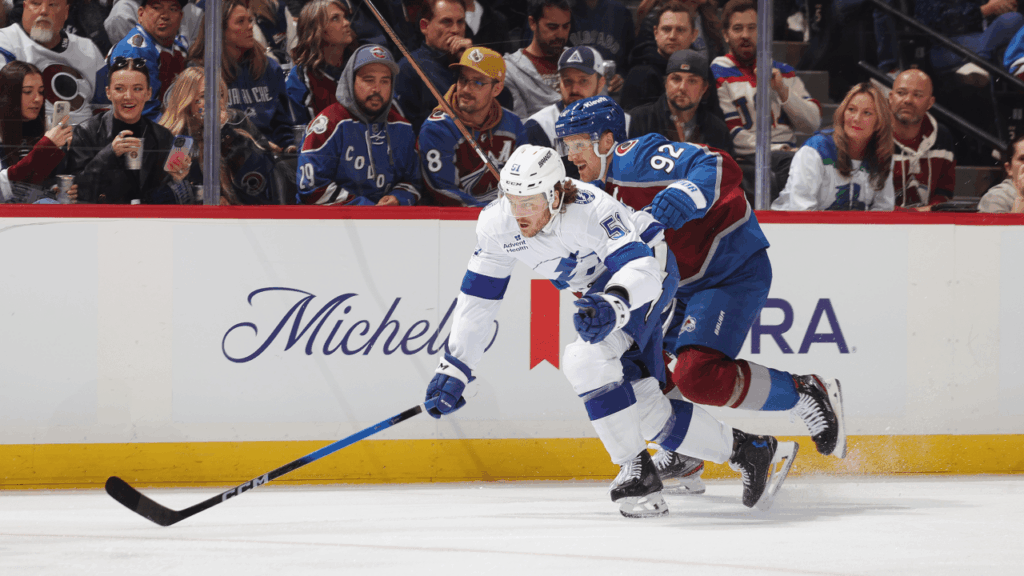
Most teams break out with structure. That is team, not individual orientated. There are a few teams that it’s 100 percent automatic what they do when they break out.
When Pete DeBoer was coach of the Dallas Stars, if their strong-side defenseman stood up and the weak-side defenseman retrieved the puck, 100 percent of the time it would come up the wall. If the strong-side D went back to get the puck, it’s going over and keep it moving 90 percent of the time, unless someone falls or something strange happens. That was their breakout structure, and to good success.
Then, for example, with a defenseman such as Makar, it’s not just the Avalanche’s team structure, it’s his ability. There is structure in there as well, but they also have a really good player. When you have a really good player within a good structure, then you have a really good team, which is what Avalanche have.
The Carolina Hurricanes (14-6-2) are an interesting team because they’re in middle of the NHL analytically as far as breakout percentage and defensive-zone exits, but they’re first in the Eastern Conference standings and they have the best defensive-zone (35 percent) and offensive-zone (46.2 percent) time percentage at even strength, according to NHL EDGE. The Hurricanes are a hard team to play against. They play aggressive defense, and they get the puck out when they can on first touch and that makes them a hard team to put pressure on.
Some of the anomalies can be explained away in special teams. For example, the Nashville Predators and Calgary Flames, who are the bottom two teams in the Western Conference standings, are among the top teams in terms of the defensive-zone time and offensive-zone time 5-on-5, but Nashville (16.2 percent, 24th) and Calgary (13.4 percent, 31st) are in the bottom quarter of the League on the power play. The Predators (82.5 percent, 12th) and Flames (80.2 percent, 18th) are also near or in the middle of the pack on the penalty kill.
So, though a team could have some good analytics in terms of offensive-zone time and defensive zone time, a good 5-on-5 team can be washed away by bad special teams, which are a key factor in every game. The Predators (7.0 percent) and Flames (7.6) are in the bottom five in the NHL in 5-on-5 shooting percentage.
The New York Rangers are an example of a team who are pretty good analytically in breakout percentage and defensive-zone exits, but they haven’t won a lot, yet. There is some explanation, though, in their 5-on-5 shooting percentage (8.4 percent).
The importance of clean breakouts and defensive zone exits can also depend on how your opponent plays.
One of the reasons why the Florida Panthers have reached the Stanley Cup Final three consecutive seasons and won the Cup the past two is the frequency with which they forecheck is the highest in the NHL. So, breaking out against them, it’s not 10 times a game, it’s 50 times a game, which is higher than every other team.
So, you can be 60 percent breaking out of your zone, but it’s 60 percent of 50 attempts, not 60 percent of 30. And there’s 40 percent of mistakes in there that are going to show up more.
There are other teams that don’t make you break out under as much forecheck pressure or frequency, but if you want to be a good team and be good defensively, break the puck out well. If you want to be a good team defensively, you exit the zone cleanly. If you want to minimize your time in the defensive zone and having to play defense, exit the zone on first touch.
The teams that do that well are hard teams to play against. They play a good offensive-zone game and that leads to positive results.