2026 Blue Jackets Preseason Q&A with Head Coach Rick Bowness: Identity, Taking Ownership & Reaching Potential – The Hockey Writers – Columbus Blue Jackets
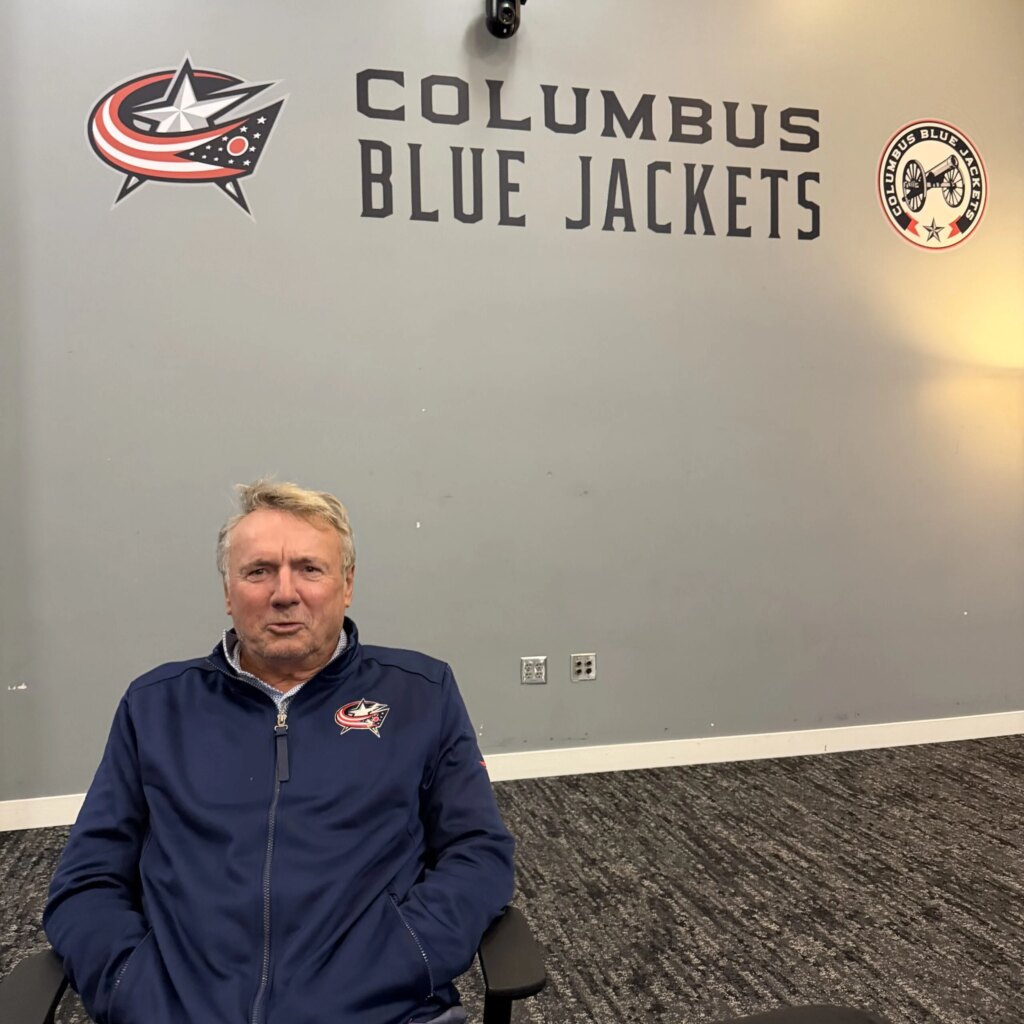
Rick Bowness was happy in retirement. He’s in a good place health wise these days. But deep down, the passion to coach was still there. That’s why it didn’t take him very long to say yes to Don Waddell last winter when the phone call came.
Bowness inherited a last-place team. He immediately changed the way the Blue Jackets played. It resulted in one of their best streaks in franchise history.
But a 2-8-1 finished left everyone with a sour taste in their mouth. It certainly did with Bowness. He agreed to a one-year extension with the Blue Jackets hoping to put last season behind them and take that all-important next step.
This time around, Bowness gets a full offseason to be able to fully implement his way of doing things. He will have to conduct things with a reduced preseason.
With camp getting underway this week, Bowness sat down with the Hockey Writers for our annual head coach Q&A. He opened up about identity, taking ownership in the room and what reaching potential looks like for several key players.
Bowness also opened up about what he learned from the way last season ended, how his working relationship is with Waddell and what truly buying in looks like from his perspective. He ends with a message for the fans after another year outside of the playoffs.
As always, this conversation was cleaned up for clarity and flow.
Rick Bowness Q&A
Q: You came off the boat last year and immediately changed the way the Blue Jacket played. Now you’ve got a full offseason. What do you want that team identity to look like?
Bowness: “I had planned, coming out of the Olympic break, to make some changes. We were playing so well at that point that we left it alone. There are some changes to the neutral zone we’re going to make, a couple of changes to defending the rush. They’re not a lot of major changes because defensively we were one of the best teams in the league. Can we make some adjustments to make it better? Yes. When you do that, you’re getting harder and harder to play against, and that’s what we want it to look like. Our structure’s good, our pressure’s good, our compete is good, and we make it very difficult for the other team to play. That’s what it looks like. And when you get the puck, you want to score and have some fun playing offense. We made some adjustments to our O-zone play last year that improved our time in the zone and our chances, and we’re going to build on that.”
Q: I don’t want to rehash a lot of last year. You mentioned that losing wasn’t important enough to some guys. Now that you’ve had a summer to sit on that, how do you turn that frustration into something the room owns instead of you calling it out yourself?
Bowness: “We addressed that with the players the very next day. I’m not walking anything back. Is it as bad as I thought it may have seemed? No. Is it where it needs to be? No. A big part of that is the players taking ownership. A lot of our message during camp will be that we need our players to step up and take ownership of what’s going on here. Talking to the players at the end of the year and all summer, they’re ready for it. They want change. They want to do better. They’re hungry. They can’t wait to get back on the ice. I’m very confident our players are going to take more ownership of what’s going on here and that we are going to turn this thing around.”
Q: You and Don go way back. What conversations have you had about where the roster still needs work? What do you agree on, and do you see anything a little different than he does? How’s that dynamic?
Bowness: “Don’s very good at keeping me informed of what’s going on. He’s the manager. He’s in charge of that. He’s very good at keeping me informed of any potential deals, any potential signings, of where we are. I don’t need to know every little detail. When things are closer, when there’s something happening that could improve the team, he’s very good at keeping me in the loop. That’s all I ask for.”
Q: The first 24 games of your tenure were one of the best stretches in team history. The last 11 were one of the worst. What did you learn about the group in that drop-off that you couldn’t have learned during the winning streak?
Bowness: “A couple things. We did not handle the injuries to (Damon) Severson and Olivier well. I learned a lot about our team then. We kept telling them at the end, ‘It’s going to get harder,’ and it did, and we didn’t handle that well. Those are situations that now, when we go into October and November, I can say, “This is what we were talking about last March and April. This is the stuff that’s not going to work. This will hurt us at the end of the year. Now I know what to look for, and it will be addressed early, not late. I know what happened at the end of the year. Those are the two biggest things: we didn’t handle the injuries well and we didn’t handle how tough it got. We’re going to handle that better this year, and we are going to get harder.”
Q: You’ve coached everything from expansion teams to Cup Final teams. What parts of your process from Dallas and Winnipeg do you use here, and what do you have to set aside because the roster or the market is different?
Bowness: “Every market’s different, every roster’s different. It’s coaching what you have, building relationships with the players so you understand better what you have and what you’re working with, and pushing them to get the most out of them. You don’t do that until you understand them and get to know them a lot better. I know them a whole lot better now than I did in January and February, so that helps.
My job is to get the most out of the team, regardless of the market, regardless of the roster. That’s the coaching staff’s job. We’ve been meeting about that. That’s our objective going in.”
Q: When you talk to your leaders, what does buying in sound like and look like?
Bowness: “You show up to the rink every day ready to work. You’ve got a good attitude, a positive attitude. You’re looking for solutions, not excuses. It’s being a good pro every day and being a good teammate. You come to the rink, you’ve got 20 guys sitting there waiting for you to do your best, and you’re counting on them doing their best. That’s what being a good teammate is all about. We want every player coming to this rink happy to be here, wanting to be part of what we’re building. That’s huge. You show that by showing up every day with the right attitude, a great work ethic, and being committed to the success of the team.”
Q: You have one year for now. What does a successful year look like to you, no matter how you leave the team?
Bowness: “Just getting the most out of the team and being satisfied. I was very frustrated at the end of the year. I just didn’t think we got the most out of it. Just because I have a one-year deal doesn’t mean I’m not going to coach a game at ll. We’ll let that take care of itself. I just want to make sure at the end of the year, no matter what, we walk out and we all feel we got the most out of this team. The goal is to get in the playoffs like the other 31 teams, and then you take your run at the Cup. The biggest thing is to get everything we can out of this team every day, identify quickly when we’re not, correct things, and keep pushing it. If we push it to the limits, we’ll live with the results.”
Q: The defensive improvement — how much was systems, and how much was just a different approach and compete?
Bowness: “That’s a little bit of everything. The biggest thing is the buy-in from the players. No matter what your system is, the players have to buy in. I was very impressed with the work ethic of these guys and the buy-in to improve the defense. They’re pros. They understood you’re not making the playoffs — you’re not even competing for the playoffs — when you’re one of the worst defensive teams. When we started to tighten things up and we went on that run, they could see the results. We were cutting down the chances against, cutting down the goals against, and we were winning games. The offense was improving because we were spending a lot less time in our zone and a lot more time in the O-zone where everyone wants to play. The results were there. That’s the buy-in from the players. I give the players full credit for that.”
Q: In your experience, how do you manage disruptions, especially given the way this offseason has gone?
Bowness: “That’s noise. You put that all aside. When we show up on the 17th and we’re going on the ice, you just focus on the team and what has to be done that day. You don’t worry about what’s gone on in the past at all. That’s all behind us. That’s all old news. The only thing that matters now is getting ready on the 17th, getting ready on the 18th, and doing that every day.”
Q: We know you are still deciding if you want to name captains this year. What factors do you consider if you go down that road?
Bowness: There’s a lot of things to decide. We’ll have that conversation with the staff (starting this week.)
Q: Want to focus on a couple of players. Dmitri Voronkov — last year you said you were still learning the player. What have you learned since, and what can you do to get the most out of him?
Bowness: “When I got here last June, he just wasn’t in great shape, and it was noticeable to me. He didn’t play much. What’s unfortunate is the game he got hurt, I had told him and the other coaches, ‘Okay, we’re giving this guy a chance now. We worked him hard. Let’s give him a really good chance.’ He was going to play on the power play, he was going to play more, and then he got hurt. That was really disappointing. We’ll see what kind of shape he shows up in next week, and that’s huge for him. I told him, ‘You show up in the best shape of your career, you’re going to be given every opportunity to get the minutes back, get back on the power play, and become an important part of this team.’”
Q: Kent Johnson is in town. What’s the messaging to him? What’s the biggest thing you are looking for out of him?
Bowness: “We asked him to get a lot stronger, and he did. We give him full marks. Barry (Brennan) and Ryan (Gadbois) are very happy with where he is. He got pushed out of too many fights last year. Lost too many battles, and he knows that. He’s a very proud guy. He’s a highly skilled guy. He’s in great shape. He’s a lot stronger. His improvement is huge to the success of the team. Fantilli, Sillinger, Mateychuk — they’ve got to get better. We’re going to give KJ every opportunity on the power play, on the top lines. He’s going to be given every opportunity in training camp and early in the season to prove he can help us go to the next level.”
Q: You mentioned Fantilli. What’s that next level look like with him?
Bowness: “Probably a point-a-game. He’s that good a player. He’s had three years now. I think it’s time he took the next step. There’s no question. He should be a point-a-game player and reliable defensively — a real solid 200-foot player on both sides of the puck. Same with Sillinger. There’s more there. We have to get that. That’s my job, to push these guys and get more out of them.”
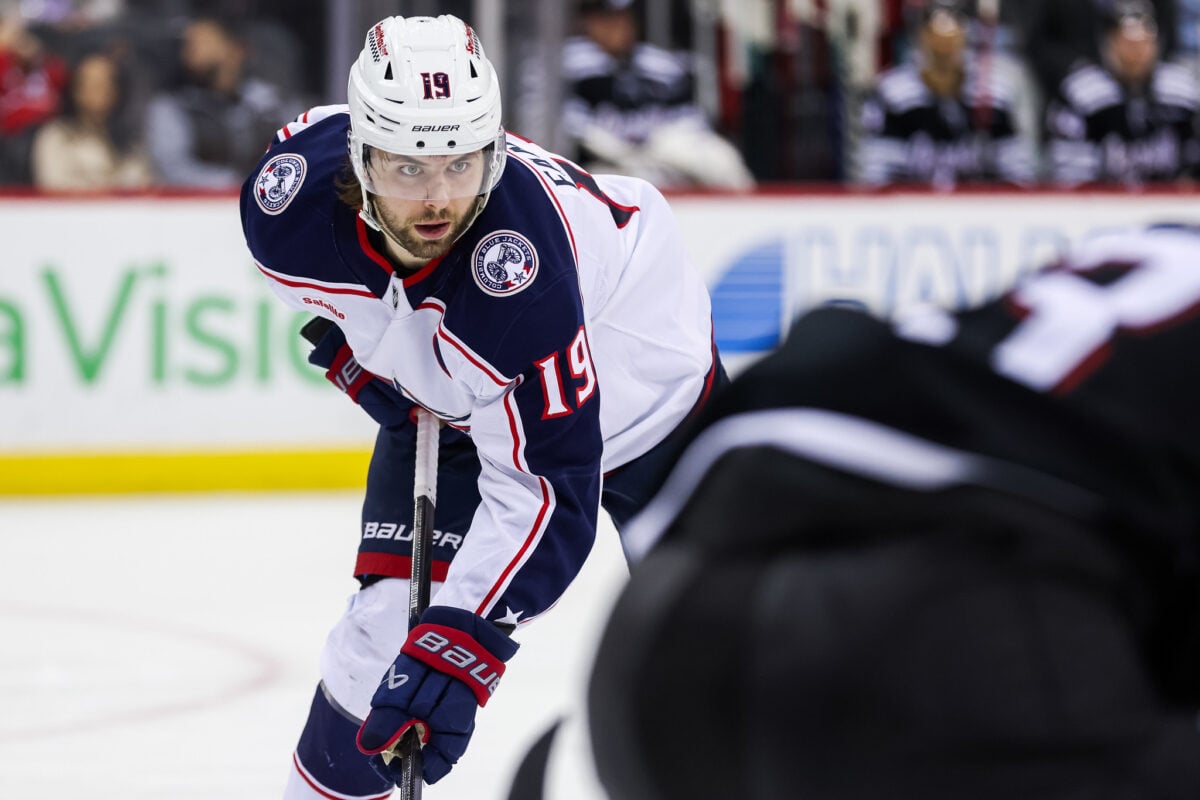
Q: Kirill Marchenko too. Opponents really targeted him at the end of last season. What do you need from him?
Bowness: “Gotta learn how to fight through that. Get harder. Fight back. We have to push him to another level. There is more in there. Especially in the last 10 games when the games are on the line, your best players have to be your best players. That’s my job, to get more out of them at that point. When the games are crucial and the playoffs are on the line, every team is the same. Your best players have to be your best players.
Q: A lot of the players credit you with your communication style. Where does that come from?
Bowness: “I’ve always done it this way. When I played I was captain of teams, and I always said when I got into coaching I was going to do it differently than my era. I was just going to keep talking to players. I’ve always done that. If you want to know something about a player or a person, you have to talk to them. You have to get to know them, know their background, know what they believe in. You just spend more time with them. It’s just the way I do things.”
Q: Is the Marchenko relationship good in your mind? You’re able to talk to him, he’s able to talk to you?
Bowness: “Yep. In my mind it is. Some coaches say the door’s always open, but they don’t really mean it. My door’s always open. I always tell the players, if there’s a problem and you don’t tell me, I can’t fix it. I can’t address it. If there’s something bothering you, we’ll work together to fix it. I can only fix what I know is a problem. They know they can talk to me about anything at any time.”
Q: The preseason is shorter now. Less time to prepare. What adjustments do you make as a coach for evaluation?
Bowness: “I sent them an email in August that training camp’s shorter this year. There’s only four games and you’re only allowed to play two. That bothers me. You’d like more, but we don’t. Every team’s the same. We only have two games to work with guys. When we go into Detroit, that last game, I want that as close to our lineup as possible health-wise. Then we work backwards from that. Everyone’s got to get two games. Some guys that don’t qualify for that are going to get three. We only have the four games. We’re going to make the most of it.”
Q: Last one. The team wants to win. The fans are sick of losing. What’s the message to the fans that you guys are going to give your best every night, and what gives them confidence you’re going to do what you set out to do?
Bowness: “It’s there. We let it slip. There were no signs of what we went through from the middle of January on. It’s there. That gives us hope. That should give the fans a lot of hope. Now it’s up to us to play 82 games and make that happen. I feel a lot better now that I have a chance to work with them from training camp on. There wasn’t a lot of practice time last year because of the condensed schedule. This year we have training camp. We’ll have more practices. I’m with them from the first day of the season, and I like that. We know what it looks like when we’ve had success. We saw at the end of the year what it really looks like when we don’t do what we’re supposed to be doing — how bad it looks. We know how good it looks. We know how good we can be.”
Free Newsletter
Get Columbus Blue Jackets coverage delivered to your inbox
In-depth analysis, breaking news, and insider takes – free.