THW’s 2026-27 Fantasy Hockey Guide – The Hockey Writers – Fantasy
With NHL games starting on Sept. 29, fantasy hockey season is right around the corner. Your draft is the most important team-building day you’ll have all year, so being prepared gives you a leg up on your league-mates.
Your typical points league has a decent amount of strategy, but categories leagues—where each stat is weighted the same, and the winner of the most stats gets a win—take this to another level, and they’ll be the topic of this piece. Here’s a draft guide for the 2026-27 campaign, whether you’re new to categories or a veteran.
Draft Strategy
Here are a few ideas to make note of as you enter your draft.
Avoid Early Goalies
Now, I want to start by dismissing the idea that “goaltending is voodoo”—that’s not exactly true. However, you can get tons of value at the position, and value that doesn’t exist with skaters.
For example, the two best netminders with double-digit games played last season in save percentage were Scott Wedgewood and Jesper Wallstedt. They may have been drafted in your league (especially the former, given Mackenzie Blackwood’s injury), but you also may have been able to scoop them up off waivers. Yet, if you got both of them on your squad, you likely dominated goaltending categories and made the playoffs.
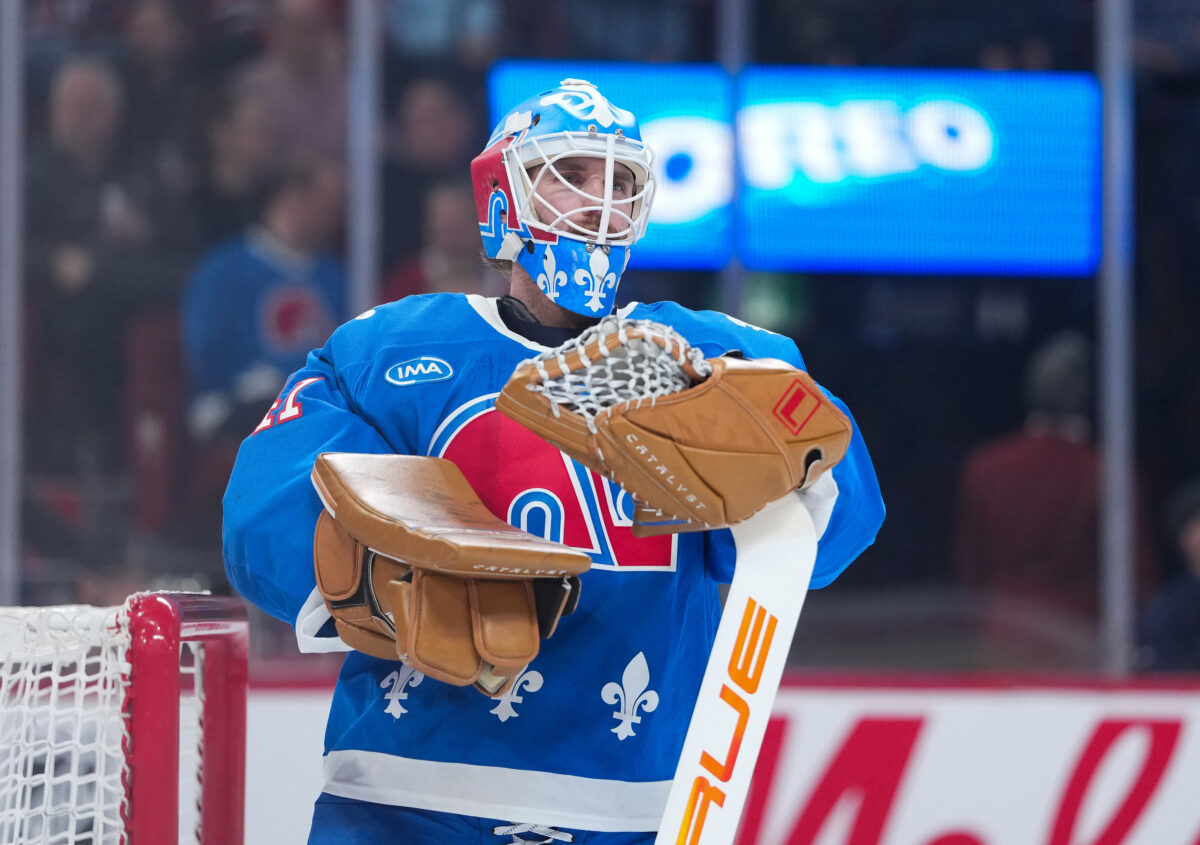
Now, it’s not a particularly bad strategy to take a goalie early. If you selected Andrei Vasilevskiy in the second round last year, for example, you probably made the playoffs, too. He had a high-end workload, led the league in wins, and put up a .911 save percentage and a 2.31 goals-against average. But you can get the same impact on waivers.
Points Are Still King—Draft Accordingly
In category formats, some people target skaters who put up shots, hits, blocks, penalty minutes, and any other non-point statistic that your league tracks. It’s called “categories,” after all—goals, assists, and power-play points are just as good as any other stat. But that’s not quite the most efficient strategy.
The waiver wire is filled with players who can do these things. Jacob Trouba, for example, was a late-round to undrafted player, yet recorded 166 shots, 143 hits, 149 blocks, and 31 penalty minutes. If you had a few players like him, you probably won most of those categories pretty often.
Streaming hit-, block-, and penalty-heavy players is viable, too. You can always find a few on the wire who have three or four games for a particular week.
A primary goal of yours should be to make point-based categories less volatile. If you draft the best team of point-getters in your league, you should theoretically be the championship favorite. Making up ground in the other categories is easy. You’re not going to find 70-point guys on the wire, meanwhile, and that’s why your team would be the best.
Keep Quality of Teammates (QoT) in Mind
Speaking of points, in many cases, a player is only as good as their regular linemates are. Take William Eklund and Will Smith last season, for example. The former was on pace for 56 points per 82 games, while the latter was at 70 points per 82 games. This is despite Eklund’s offensive impact being flat-out better than Smith’s (via Evolving-Hockey’s regularized adjusted plus/minus model).
There was a clear difference between the two players, though. Eklund spent most of his 5-on-5 ice time being centered by Alexander Wennberg. Smith, on the other hand, rarely played without Macklin Celebrini. Now the production gap starts to make sense.
It’s impossible to predict how head coaches will deploy their skaters, but you can always make an educated guess. If a forward has a proven track record and is projected to play alongside a superstar (say, JJ Peterka with the Boston Bruins), they might be a smart draft pick.
Early Picks Are Sacred—Have a Plan
Arguably even more so in categories leagues than standard points ones, your early picks are sacred. You should have a detailed plan because the board may not fall the way you thought it might. Being unprepared for that situation can leave you in a tough spot for the rest of the season.
Make a ranking of the players you want on your team, and don’t be afraid to overdo it. Putting in that extra bit of effort is much better than being stuck with a pick you regret before the draft is even over.
Be Wary of Mid-Round Defensemen
After the elite, point-getting defensemen are off the board, be careful with the position. The non-elite guys can be pretty volatile, especially if you drafted them for their offense. You may even feel compelled to sell or drop them in the midst of an early-season dry spell.
I’m not saying to avoid mid-round defensemen, but know what you’re getting into.
Draft for Upside Late (Especially in Deeper Leagues)
If you’re in a deeper league, this is what can give you a huge advantage. You’ll probably end up dropping some of your late picks, anyway, so why not draft for upside? Last year, Leo Carlsson and Smith were among the top steals (the former being a championship-winning hit in deeper leagues).
I won’t share who I think this year’s steals could be just yet, but it’s worth highlighting that this upside does exist. You may find out pretty early, too—Carlsson and Smith were clear hits almost immediately.
Don’t Be Scared of Good Goalies on Bad Teams
Lastly, just because a goalie’s team is bad doesn’t mean you have to avoid them. These types can have serious upside—Spencer Knight had similar numbers to Igor Shesterkin and Logan Thompson going into late January.
This also works for unexpected playoff teams. Philadelphia Flyers netminder Dan Vladař was almost certainly on your waiver wire at the beginning of the year, and he almost certainly was not by the end.
Post-Draft Strategy
Even in competitive buy-in leagues, some people stop caring about their team after the draft. But what you do after the draft can sometimes be more important than what you do during it. Here’s a strategy.
Keep Track of Player Schedules (Frozen Tools)
If you’re expecting a close matchup or you’re in a playoff game, small advantages can make a big difference. This is where keeping track of player schedules comes in handy. A good resource for this is Dobber’s Frozen Tools, showing every team’s schedule for whatever date range you want.
Let’s say you’re matched up with someone who wins the block and hit categories a lot. You can target players who put up high numbers in those stats and play a lot of games for that particular week. Ideally, you want someone who plays on days where you don’t have to take anyone out of your lineup to put them in.
This only takes a few minutes each week to plan out, so it’s hardly much of a commitment. But it will give you an edge over your league-mates, who are probably not thinking that far ahead.
Make Trades (And Have a Vision for What Your End Goal Is)
By their nature, category leagues promote trading. Since every team has some kind of weakness after the draft, people are generally more open to making a move. This is where you strike.
Evaluate all of your league-mates and try to find a weakness in their roster. Perhaps it’s that they are consistently losing a particular category. Maybe a player of theirs is in a scoring drought. You might even have a player from their favorite team that they really want. The point is, someone’s always willing to make a deal.
Sometimes, you might want to make a trade with a future move in mind. Let’s say, for example, one of your league-mates puts a player on the trade block. You don’t have to want the player, but you can acquire them and flip them for more than you paid. If you’ve ever heard the story about the man who traded a paperclip up to a house, it’s kind of like that. As long as you’re getting value, a move is worth it.
Trading is fun, but it shouldn’t be mindless: there should be some kind of end goal in mind. Whether that’s building a team of elite point-getters and solid depth (my preferred strategy) or some other variation, have a plan for what you want your team to be.
Keep Tabs on the NHL
This is probably obvious, but you’ll want to keep tabs on what’s going on around the NHL. You don’t need to spend hours a day studying hockey, of course, but if a goalie on waivers is performing well, consider picking them up.
If your league is filled with people on the East Coast, they may have missed Wedgewood’s transformation from a backup to a contender’s starter. Box score snooping once in a while can genuinely help you win your league.
Players Who May Miss the Start of the Season & Their Timelines
Some injuries make headlines. Others you can easily forget about, leaving you in a tough spot early in the season if you accidentally draft someone who won’t be in your lineup. Let’s take a look at some players who could miss the start of the 2026-27 campaign.
The first is Frederik Andersen, who was poised to be the Edmonton Oilers’ starter. We don’t know much right now, but he’s expected to miss training camp. Connor Bedard’s injury is one you likely already know about—he could miss time into November. Vancouver Canucks netminder Thatcher Demko, who got surgery in January, may not be ready to start the new campaign.
He’s not injured, so it’s easy to forget that Cutter Gauthier could miss time since he’s unsigned. To give some insight into the situation, he reportedly rejected a four-year deal that would’ve made him the seventh-highest-paid player in the NHL for 2026-27. It wouldn’t be unprecedented for him to miss time—Brady Tkachuk did briefly for the Ottawa Senators in 2021-22.
Minnesota Wild general manager Bill Guerin recently spoke on goaltender Filip Gustavsson, stating, “I wouldn’t expect him in the first couple weeks, but we’ll see how quickly he’s progressing.” With how strong Wallstedt looked as a rookie in 2025-26, a possible outcome is that Gustavsson serves as the team’s 1B even when he is healthy.
Carolina Hurricanes forward Seth Jarvis got surgery in the offseason, and he could be out for an extended period. At best, he’ll be back late in October, but it may take a couple more months. Florida Panthers veteran winger Brad Marchand also had surgery in the summer, but his recovery timeline is less clear. There aren’t any indications that he’ll be out long-term, though. His former teammate, defenseman Charlie McAvoy, is suspended for the Boston Bruins’ first six games.
Finally, Troy Terry just had his most productive season by points per game, but following surgery on June 9, he was given a recovery timeline of five to six months.
Young Late-Season Risers in 2025-26 & Their Sustainability
Late-season risers, particularly when it’s done by a young player, can be a sign that a breakout is coming the following campaign—Carlsson and Smith are examples. At the end of 2025-26, Adam Fantilli, Matvei Michkov, Gabe Perreault, and Jimmy Snuggerud all elevated their fantasy production. Is that sustainable?
With Fantilli, the opportunity is always there. In the 330 minutes he spent with star teammates Kirill Marchenko and Zach Werenski at 5-on-5 last season, the 21-year-old was on the ice for 3.27 goals and 3.50 expected goals per 60 minutes, putting up a goal share of 60% and an expected goal share of 57.6%. In the 249 minutes Fantilli played with those two on the bench, he had 1.44 goals and 2.33 expected goals per 60 minutes, a goal share of 24.0%, and an expected goal share of 44.7%.
These types of metrics, known as with or without you (WOWY), should be taken with a grain of salt, but it doesn’t take a rocket scientist to know Fantilli benefits from having Marchenko and Werenski on his team. He has the potential to sustain that level of play. Take a look at how his first 50 games compared to his last 32:
| Game Range | Goals Per Game | Points Per Game | Shots Per Game |
| Games 1-50 | 0.24 | 0.60 | 2.74 |
| Games 51-82 | 0.40 | 0.91 | 2.57 |
Fantilli’s shooting percentage nearly doubled in his final 32 games, which certainly helped, but a 15.6% clip shouldn’t be too unsustainable for a player of his caliber. It’s reasonable to be bullish on him entering 2026-27—his situation is pretty good.
Michkov is statistically a more potent offensive player at this stage, but a lack of opportunity bumps him down a ton. It wouldn’t be surprising if he spends most of this season on the third line, given his deployment in 2025-26.
He had four goals, 18 points, 34 shots, and a plus-11 rating in his final 16 contests, but it may be an uphill battle for him to earn ice time. His ceiling is limited, anyway, due to the Flyers’ defense-first system and consistently horrid power play (dead last in efficiency all but once since 2021-22).
Next up is Perreault. In March and April, he recorded nine goals, 19 points, 41 shots, and a plus-4 rating across 23 games. The 21-year-old New York Rangers winger got a usage bump after Artemi Panarin was traded to the Los Angeles Kings, and the results were promising from a fantasy perspective.
As discussed previously, QoT is important. If Perreault is a top-six staple, he could be a 60-point player. Higher shot totals would be ideal, though.
To finish off, there’s Snuggerud, who went nuclear to end the 2025-26 season: 11 goals, 26 points, 65 shots, and a plus-20 rating in his final 21 games. If you picked him up during your playoff run, you may have won the championship. He was a game-breaker.
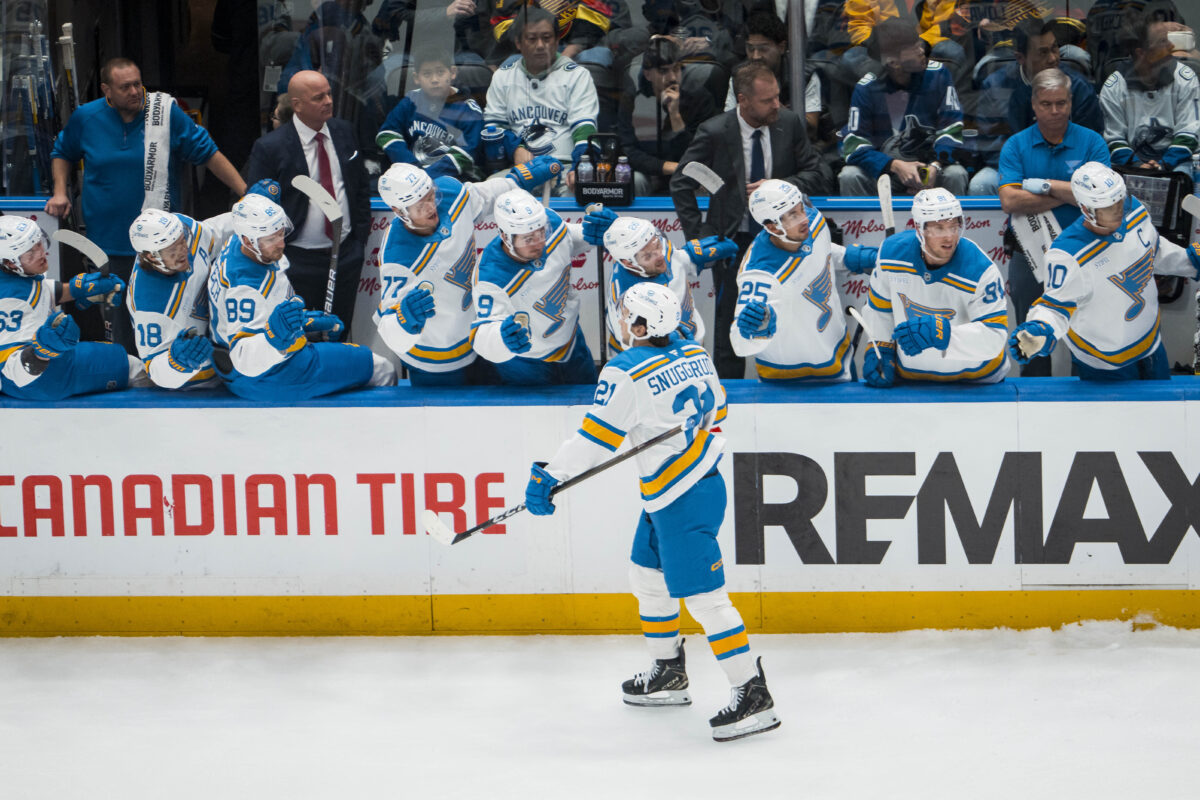
The 22-year-old is poised to be reunited with now-captain Robert Thomas in 2026-27. They were a sensational duo, and with Jordan Kyrou out of the picture, there’s no one for Snuggerud to really compete with. A young goal-scorer next to a superstar playmaker is exciting to think about, even if 26 points in 21 games isn’t a sustainable pace over a full season. A 30-goal, 70-point campaign would be great, and it’s in the realm of possibility.
Players to Avoid
Now, let’s get into the actual draft. Which players might you want to avoid, from the early to late rounds? Here are four players for each. (Note: All rankings and ADPs will be courtesy of Yahoo, and this format will continue for the rest of the article.)
Early Rounds
Player one: Rasmus Dahlin is ranked 41st by Yahoo, but his ADP is higher: 35.2. His point numbers are strong, but he’s blocking half the shots and contributing a third of the hits he was in 2023-24. He’s even shooting less. So, as good as he is, I’m fading him at his current spot.
To put things in perspective, Dahlin had an almost identical season to Darren Raddysh. The former is going a dozen spots earlier, though, and there probably won’t be a scenario where I draft Raddysh (stay tuned on that).
Player two: Yahoo has Montreal Canadiens defenseman Lane Hutson ranked 19th on their board, and his ADP is 20.7. While he is terrific in real life, and his offensive game should theoretically translate well to fantasy, there are better options in that draft range.
For a defenseman drafted that high, you’re looking for an offensive dynamo. Hutson falls short in shots and power-play points, averaging just 1.51 and 0.24 per game last season. Those marks are about half of what Quinn Hughes had last season, and he’s only going a half-dozen spots ahead.
Adam Fox has availability issues, but he’s being taken in the late 50s despite having better per-game averages last season. He put up the same numbers, only with double the power-play scoring. Fox is more likely to regress than Hutson, and injuries are a concern, but they’re equals at worst heading into 2026-27.
Player three: Another player I’m fading is Wyatt Johnston of the Dallas Stars, ranked 15th by Yahoo with an ADP of 19.0. If the 23-year-old can replicate the exact performance he had in 2025-26, that’d be decent value—he had 45 goals, with 27 of them coming on the man advantage, and 86 points. But some regression should be expected.
If power-play points are a category in your league, Johnston was one of the best players in fantasy, even with his 86 points not completely jumping off the page. However, if he’s unable to match that kind of production on the man advantage—which is likely—he’s not worth his ADP.
Player four: Currently, Tampa Bay Lightning goaltender Vasilevskiy is typically the ninth player coming off the board, and he’s ranked 10th. Now, I don’t have a problem with the player or the situation—Vasilevskiy is one of the NHL’s best netminders, and he finds himself on a great team. But the value isn’t there for me.
Vasilevskiy was going about a dozen spots later last year, and he was coming off a better season than he is now. He’s going at least 10 spots too high for my liking.
Middle Rounds
Player one: A theme that you’ll see for the rest of the “players to avoid” section is goalies who aren’t the locked-in full-season starter for their great teams. Brandon Bussi is first on the list, ranked 90th but boasting a 74.6 ADP.
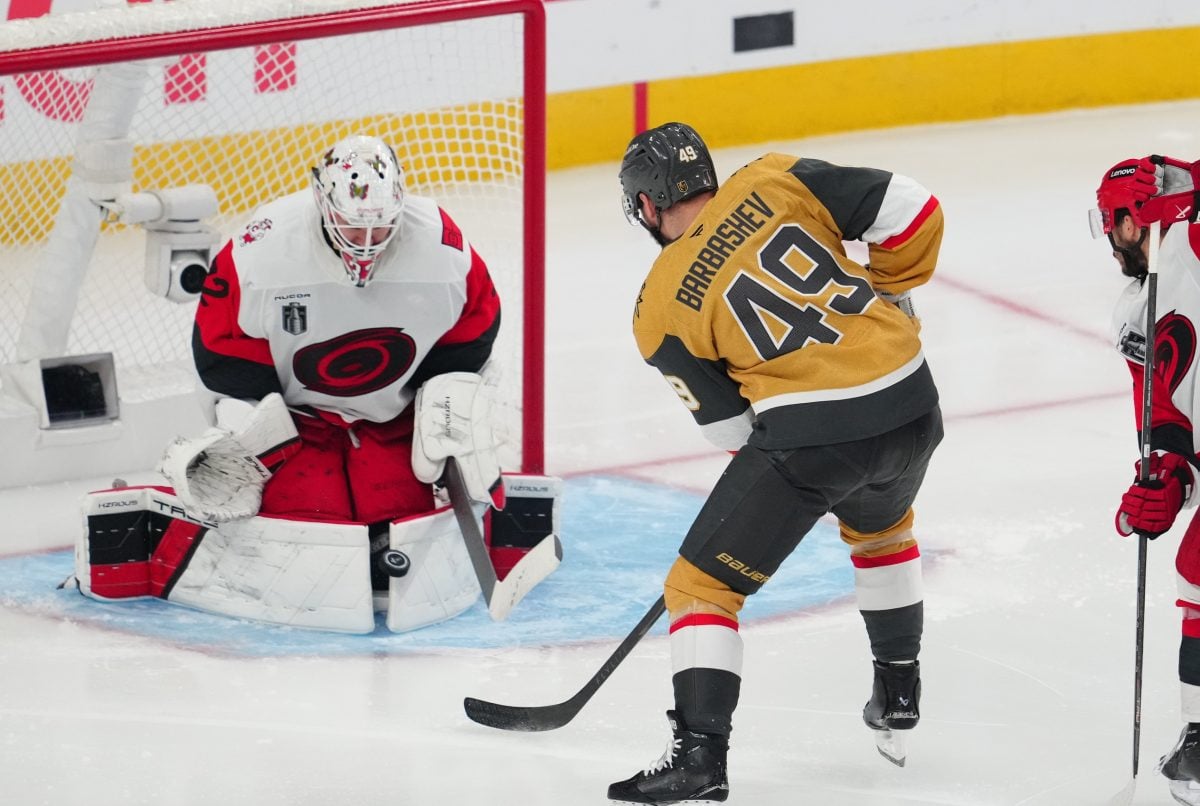
As strong as Bussi was between the pipes, he can lose his job just as easily as he earned it. He was a waiver claim entering the 2025-26 campaign, worked his way up to being the starter, lost his job in the playoffs, then got it back at the very end. With forwards consistently hovering around a point per game being drafted in the same range as him, I’ll pass.
Player two: It’s wash, rinse, repeat with Jakub Dobeš. He’s a talented young netminder who should have a bright future ahead of him, but the Montreal Canadiens are deep between the pipes. Jacob Fowler could seize the starter role at some point, and Sam Montembeault, who started 60 games in 2024-25 and finished eighth in Vezina Trophy voting, can’t be overlooked.
Dobeš is ranked 91st and has an 81.3 ADP. The 25-year-old was lights out in the playoffs, but there are no guarantees he gets a higher workload than the 43 games he appeared in last season.
Player three: This one is confusing to me. Sure, being stapled to Hughes at 5-on-5 is great, but Brock Faber has never been that good of a fantasy player, and he probably won’t be in 2026-27 without power-play production to lean on. Yet, he has an ADP of 82.3, though Yahoo only ranks him 98th.
Faber averaged 0.64 points, 2.16 shots, and 1.85 blocks last season, but his hitting and power-play production are cons. Vince Dunn has a 128.3 ADP, yet offers more offensive upside. If your league tracks plus/minus, Faber is the better option, but not substantially.
Player four: Porter Martone is going far too high for my liking: 65th on average, and he’s ranked 68th. Now, his brief regular-season action for the Flyers was fantastic: 10 points, 32 shots, and 16 hits in nine contests. But compare that to the playoffs, where he would’ve theoretically been a waiver player: five points, 23 shots, and 33 hits in 10 games.
I’d be cautious about drafting any Flyers player too high due to reasons touched on in the Michkov section (defensive system, bad power play). Martone could be a 60-point guy who lands two hits a night, but Sebastian Aho, Jesper Bratt, and Lucas Raymond are going later than him even while averaging 86, 83, and 78 points per 84 games over their previous three seasons, respectively.
Late Rounds
Player one: Bowen Byram, ranked 164th with a 114.4 ADP, is due for a role expansion with the Chicago Blackhawks. But he’s never been one to get shots, hits, or blocks—all important fantasy categories for a defenseman.
As a member of the Buffalo Sabres, Byram had the following per-game averages: 0.49 points, 0.05 power-play points, 1.23 shots, 0.87 hits, and 1.31 blocks on 22:27 of average ice time. He should be the Blackhawks’ quarterback on the man advantage, but his other stats may not change much. Dunn would be a better selection.
Player two: While talented, James Hagens isn’t projected to be in the Bruins’ top six, and he’s only 19 years old. The 2025 seventh-overall pick has long-term upside, but it’s hard to picture him living up to his 126.3 ADP. Boston doesn’t have enough depth to make him worth selecting that high.
Player three: Ukko-Pekka Luukkonen is going considerably higher than Alex Lyon, even though they performed equally in the regular season, with Lyon superior in the postseason. The assumption should be that they’ll split starts, so I’m fading Luukkonen’s 115.6 ADP and rank of 131.
Player four: After scoring 42 goals last season and recording 26 power-play points, Steven Stamkos is technically very underrated by his 125.1 ADP. But with the Nashville Predators shipping Luke Evangelista off to the New Jersey Devils, I’d be wary of the 36-year-old’s Yahoo rank of 104.
The WOWY metrics may be deceiving, since they didn’t play a ton together, but Stamkos was on the ice for 3.80 goals per 60 minutes at 5-on-5 in the 347 minutes he spent with Evangelista and had a 66.7% goal share. When Stamkos was away from the blossoming winger, he was on the ice for just 1.86 goals per 60 minutes with a 37.1% goal share.
With Evangelista out of the picture, Stamkos may be a waivers-type player in 2026-27, even in deeper leagues. The veteran forward should still provide solid goal production, but regression could hit him hard.
Players to Be Cautious Of
Now, we jump to players who I wouldn’t outright fade, but I’d be cautious about taking them.
Early Rounds
Player one: After recording 95 points with 33 on the power play, 221 shots, a plus-25 rating, and 101 blocks, Evan Bouchard has an ADP of 16.9 and is ranked 18th by Yahoo. But whether he’s worth that much depends on what version of him you’re getting.
In 2024-25, Bouchard recorded 67 points. He was still a top defender in fantasy, but not one you’d use a second-round pick on. He should be fairly bust-proof barring injury, but playing at the level he did last season could be tricky.
Player two: Connor Hellebuyck’s ranking and ADP—24th and 23.8, respectively—could be strong value if his trade request is granted sometime this season and he goes to a favorable defensive environment, but that’s a big “if.”
At 33 years old, perhaps Hellebuyck’s .895 save percentage last season wasn’t entirely a fluke, and he no longer has a Hart Trophy-caliber ceiling. With no trade imminent and the clock ticking on the 2026-27 campaign’s opening games, there’s a non-zero chance the veteran takes some time away from the team (this is merely speculation).
For context, Vasilevskiy wasn’t going too far ahead of Hellebuyck’s 23.8 ADP last year, even though he was coming off a .921 save percentage, 2.18 goals-against average, 38 wins, and was the workhorse starter of a team with championship aspirations. I’d be cautious.
Player three: As a hockey player, I have no doubts about Matthew Schaefer’s greatness. He had one of the best rookie seasons ever, and he will almost surely be a franchise pillar for the New York Islanders. Fantasy-wise, though, I do have my doubts.
Schaefer’s 42nd ranking isn’t too bad, but his 32.3 ADP gives me pause. At that spot, you’re assuming he improves on his 23-goal, 59-point output, but he’s probably due for some goal-scoring regression, seeing as he shot 10.4%. He shoots a lot, blocks enough, and should put up points, but I’m not sure he should be a late third- to early fourth-round pick.
Player four: Mark Scheifele was terrific last season. Following a career high of 87 points in 2024-25, he had 103 in 2025-26. But if he takes a step back, his power-play production, low-volume shooting (for a player of his caliber), hits, blocks, and potential plus/minus worry me slightly.
Scheifele is an interesting player. He only had 22 power-play points last season and averaged 2.13 shots on goal. So, if he’s only an 80-point player, he’s not going to be worth his 35.9 ADP and 32nd ranking.
Middle Rounds
Player one: Ranked 55th with a 43.3 ADP, Mitch Marner isn’t being drafted for what he did last season. He had 80 points in 81 games, but he only recorded 24 goals, 24 power-play points, 165 shots, and had the lowest per-game hit total of his career (0.30).
If Marner can return to the 102-point heights he reached with the Toronto Maple Leafs in 2024-25, this ADP is solid value. Otherwise, he’s a player who will pile up assists but lag in some other areas. If you take a defenseman early, it may be best to fade the Vegas Golden Knights winger, or you risk being too assist-heavy.
Player two: Being a talented scorer on a contending Vegas team paid dividends for Pavel Dorofeyev, in real life and in fantasy, signing a $77 million contract with the Rangers after potting 37 goals. But now that he’s in a new environment, can he sustain his previous production?
The good news is that New York certainly paid Dorofeyev to be what he was in Vegas: his $11 million cap hit is tied for 19th-highest in the NHL. Plus, he rarely played with Jack Eichel or Mark Stone at 5-on-5, so there’s no dependency here. But 20 of Dorofeyev’s goals came on the power play, where he did spend a lot of time with those guys.
If you’re comfortable betting on Dorofeyev in a new situation, that’s great. His 71.7 ADP isn’t too steep, and his Yahoo ranking of 65 suggests he won’t go much higher than that in your draft. But with a proven scorer like Raymond going at the same spot, do you take the chance?
Player three: Raddysh has a 50.7 ADP and is ranked 52nd following a breakout for the ages. The question is, do you trust him to repeat it in a new environment?

Sporting a powerful shot, Raddysh’s 22 goals likely weren’t entirely a fluke. Seeing as he nearly doubled his previous career shooting percentage to reach that mark, however, regression may be in order. Being without Hart Trophy winner Nikita Kucherov isn’t doing the 30-year-old any favors, either.
Raddysh should still put up shots, and he should still be productive offensively—Toronto invested $68 million in him. Reaching his 2025-26 heights could prove difficult, though.
Player four: I’ve sung the praises of Thomas already, but as a fantasy player, he has his ups and downs. He’s prone to point droughts, doesn’t shoot that much, and has never scored 30 goals. The 27-year-old is sort of like Marner in that he will put up plenty of assists but has question marks elsewhere.
Thomas is ranked 57th with a much lower ADP of 76.5, so he could be a decent pick. If he only maintains his play from last season, though, there will be better players available.
Late Rounds
Player one: Once again, QoT is important. Morgan Geekie was excellent last season, but he may be facing a crisis in that department with Boston trading two first-round picks to the Utah Mammoth for Peterka. Now, there’s competition to play alongside David Pastrňák.
A great deal of Geekie’s 39 goals were thanks to No. 88. With a relatively low shot output (181 in 81 games), the 28-year-old will need to continue scoring goals to be a fantasy star. There may be a dramatic decline in that department if Peterka takes on top-line duties, so while his 115.2 ADP and ranking of 105 are low for what he produced last season, he could end up being a waiver player.
Player two: Mattias Samuelsson matches that last sentence: he could be a waiver player. The upside is respectable, recording 41 points, a plus-41 rating, 109 shots, 132 blocks, and 154 hits in 2025-26, but the 26-year-old had career highs across the board.
The risk here is low, with Samuelsson’s ADP only being 128.9 and his ranking sitting at 192. He’s going around where Dunn is, though, who I’ve mentioned a few times already as a proven offensive defenseman.
Player three: Logan Stankoven is ranked 119th and has a 134.8 ADP. Recording 11 goals, 55 shots, 42 hits, and a plus-8 rating in 19 playoff games, that type of production would be fantastic at this draft position over a full regular season.
But he only had 21 goals, 166 shots, 50 hits, and a plus-12 rating in 81 regular-season contests. If you’re getting that version of Stankoven, he’s not really worth drafting. The Hurricanes are a great team, so QoT is a plus for him. There are both pros and cons here.
Player four: Ivar Stenberg was selected second overall in the 2026 NHL Draft, and he’s getting some late-round love: a 133.1 ADP and a ranking of 139. But with him projected to play a middle-six role—not one next to Celebrini—I’d consider looking to other options in this range.
There’s steal potential here, of course. If Stenberg’s dynamic two-way game wows head coach Ryan Warsofsky, a first-line role at 5-on-5 could be in the 18-year-old’s near future. Unfortunately, that’s a bold assumption. We’ll see how things play out.
Players to Target
Finally, we have the players I’m targeting as much as possible in my drafts. There’s injury risk with many of them—so these guys may not be for you—but Kirill Kaprizov was injury-prone, too, and he suited up for 78 contests in 2025-26.
Early Rounds
Player one: Eichel hasn’t reached the 80-game mark since he was a teenager. But his 22.8 ADP and 23rd ranking are ridiculously low, seeing as he was arguably a top-10 player in fantasy when healthy (he only missed eight games). He’s good enough to be your best player, no doubt about it.
Losing Dorofeyev is a negative for the power play, I suppose, but Eichel should be fine. He recorded 90 points in 74 games last season, along with 260 shots and a plus-23 rating. If he can bump up his 10.4% shooting clip (his worst as a Golden Knight), he may be even more potent in 2026-27.
Player two: Auston Matthews was at his absolute floor last season, with 27 goals, 53 points, and 12 power-play points in 60 games. As a result, he’s ranked 16th with a 17.7 ADP.
The funny thing, though, is that Matthews was still elite when healthy in category formats. He averaged 0.45 goals, 3.78 shots, and 1.35 blocks per game—worth his current ADP if he did that while healthy. Of course, we all know his ceiling is much higher: 69 goals, in fact.
I wouldn’t expect Matthews to be that level of player again, but 50 goals aren’t out of the question. Injuries and age may start impacting his performance, but with Jim Hiller in and Craig Berube out as head coach, No. 34 could be a top-five player in this format.
Player three: It’s hard to beat Martin Nečas’ situation. He’s a point-per-game player in his own right, something he proved with the Hurricanes. But now that he’s stapled to Nathan MacKinnon with the Colorado Avalanche, the 27-year-old’s upside is through the roof.
Nečas recorded 38 goals, 62 assists, 24 power-play points, a plus-47 rating, 206 shots, and 85 hits last season. He’s going in the middle of the second round, with a 15.5 ADP, and he’s ranked 14th by Yahoo. Even though he’s going later on other platforms, I still like him at that range.
Now, Nečas is a regression candidate. He scored 84 goals on 64.67 expected goals next to MacKinnon at 5-on-5, and his plus/minus will definitely decline. But he’s the safest pick at his ADP and has elite upside. The Avalanche’s power play was a major area of concern last season, with him only recording 24 points on the man advantage.
Something along the lines of 90-95 points with 30 on the power play is well within his capabilities and worth a second-round pick. That range has too many question marks for me to fade MacKinnon’s partner in crime.
Player four: William Nylander shot at a career-high 19.2% last season, so some regression may be in order, but his 48th ranking and 42.6 ADP seem far too low to me.
On a per-game basis, Nylander had his worst categories season of the past three, and he was on pace for 39 goals, 100 points, 28 power-play points, and 197 shots. Durability was a strength of his previously, missing one game from 2021-22 to 2024-25, so I’m not concerned he’ll miss 17 games like he did last season.
Nylander scores goals and puts up points. That’s what he should continue to do in 2026-27, and the additions of Hiller, Gavin McKenna, and Raddysh are pluses.
Middle Rounds
Player one: Aho has been a favorite draft pick of mine for years now. He’ll get you 80 points, 200 shots, 25 power-play points, respectable hitting numbers, and go about his day. That’s a bargain at rank 79 and at a 77.1 ADP. He’s safe and offers the upside of players taken multiple rounds earlier. Unless he misses double-digit games for the first time in his decade-long career, you’ll be happy with this selection.
Player two: Sure, Sidney Crosby missed 14 games last season, but he’s going far too low. His ADP is 52.8, and he’s ranked 50th by Yahoo.
Per game, Crosby averaged 0.43 goals, 1.09 points, 0.34 power-play points, 2.35 shots, and 0.88 hits. Mind you, that’s on the lower end of what he’s done over the past few seasons. “Sid the Kid” and former teammate Jake Guentzel had similar campaigns, and he’s going 20 spots higher (a fair ADP!). If No. 87 is on the board in the late 40s or early 50s, I’m taking him.
Player three: Look, Dylan Larkin is in a weird situation: he requested a trade from the Detroit Red Wings over three months ago, and it hasn’t come to fruition. But he’s not expected to sit out if he’s not dealt, and he’s way more productive than his 92.0 ADP and 71st ranking.
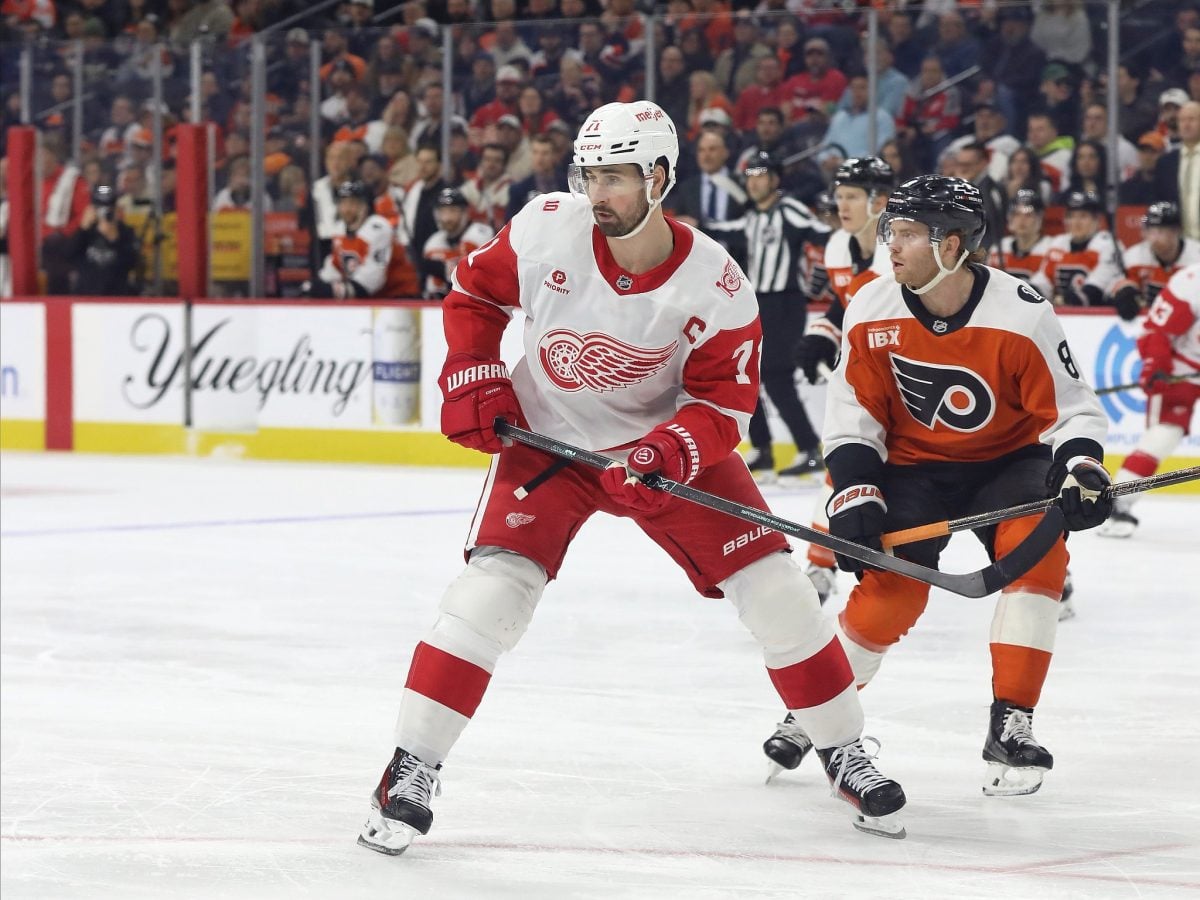
Larkin averaged 0.46 goals, 0.91 points, 0.32 power-play points, 3.09 shots, a little more than half a hit, and a little less than half a block per game. That’s about where Sam Reinhart was at, and his ADP is nearly 50 spots higher. Give me Detroit fans’ least favorite player.
Player four: Ending the middle-round candidates, I’m finding it hard to pass on Stone. Yes, he will probably miss time, seeing as he’s only played 68.6% of all possible regular-season games since his age-30 campaign began. But when he’s on the ice, he’s a lot better than rank 96 with an ADP of 104.9.
In 60 games, Stone had 28 goals, 73 points, a plus-26 rating, 130 shots, and 47 blocks last season. Over a full 84-game campaign, who else is putting up those numbers in the late 90s and the 100s? Almost nobody, even if we account for regression. I’ll take an injured Stone over anyone else at 100% health—especially since he can be placed on injured reserve (IR).
Late Rounds
Player one: This one was so strange that I nearly omitted it. For some reason, New Jersey Devils center Nico Hischier is ranked 108th in Yahoo leagues, and his 129.4 ADP is somehow worse. That’s not going to be the case on all platforms, but he went 87th in an ESPN mock draft I did, which is also too low.
With the NHL’s expansion to 84 games, Hischier is a solid bet to reach 30 goals and 70 points. He’s averaged 2.54 shots, 0.72 blocks, and 0.64 hits over the past three seasons, so while you won’t be getting superstar production, he should probably be drafted somewhere in the early 60s—not in the 80s, and especially not into the 100s.
Player two: Jarvis, as noted, probably won’t suit up until November or December. But he was a game-changer when on the ice last season, with per-game averages of 0.45 goals, 0.93 points, 0.30 power-play points, 3.15 shots, and 1.14 hits. There are few better than him when he’s on the ice.
If you trust your team-building skills, Jarvis is a bargain at his 122.3 ADP. I’d take him in the 70s or 80s, if necessary—he’s too valuable when healthy to pass on.
Player three: The past two seasons have been difficult for him, but Elias Pettersson is better than where he’s going. He’s ranked 137th by Yahoo with an ADP of 137.6. Even if we assume the Canucks are a dreadful team once again, the Swedish center’s blocking numbers are elite for a forward.
Though plus/minus may be an issue (he was minus-30 in 2025-26), Pettersson’s all-around numbers are solid: 0.69 points, 0.30 power-play points, 0.91 hits, and 1.46 blocks per game. He only averaged 1.78 shots per contest, but his worst is worthy of a lineup spot. His ceiling, of course, is high-end (102 points in 2022-23).
Player four: I won’t go into too much detail with Snuggerud, since I already have, but he’s a player I’m targeting. His 127th ranking and 132.7 ADP are almost too-good-to-be-true value.
Going into this fantasy season, I assumed people would overcorrect for Snuggerud’s excellent finish to the season, placing him in the top 60 or something of that nature. But that hasn’t happened. With Kyrou off the team, there’s no reason for the Blues to separate a sniper of his caliber from a playmaker like Thomas. The upside here is fantastic.
Ranking Deep League Sleepers
Now, for some sleepers if you play in a deeper league.
Player one: If you look at Evangelista’s production from last season overall, you might not see a reason to draft him: 12 goals, 44 assists, 17 power-play points, and 176 shots in 81 games. It’s not like he had terrible teammates, either, sharing the ice with Stamkos for 347 5-on-5 minutes, Filip Forsberg for 400, and Ryan O’Reilly for 606.
He likely won’t get much time on the Devils’ first power-play unit, but going from Nashville to New Jersey is an opportunity for the 24-year-old. At 5-on-5, he’s poised to play next to two of Bratt, Hischier, Hughes, and Meier, which could unlock his point-scoring ceiling.
If you’re worried about goal-scoring, Evangelista had a career-worst 6.8% shooting clip, so he’s due for positive regression. We could be looking at a 70-point player here, and he’s ranked 201st with a 144.4 ADP (the 13th-lowest recorded ADP on Yahoo).
Player two: Second-last on that ADP list is Canadiens backup Fowler, at 151.2 and a ranking of 174. As a rookie, the 21-year-old started 17 contests and put up a .908 save percentage, 2.43 goals-against average, and a shutout to go alongside a 9-6-2 record. After a standout college career, fans should be excited for what’s ahead.
The problem here is Dobeš, who was a reliable starter for Montreal. It’s safe to assume, however, that Fowler will eventually become the full-time guy, whether it’s this season or a few down the line.
Fowler may not surpass Dobeš in the depth chart early in the season, but he will be a contender for more starts. A reasonable outcome is somewhere along the lines of 30-35 appearances and similar numbers to last season. The youngster’s ceiling is becoming the Habs’ starter, and his floor is one where Montembeault regains the backup role.
There are a variety of outcomes here, but Fowler has performed at all levels, so I’m slightly optimistic. Even if he’s not the starter, he’ll be worth holding throughout the campaign depending on his start share, since the Canadiens should be a great team again in 2026-27.
Player three: Brandon Montour doesn’t have an elite ceiling, but he gets the job done. He has the shooting frequency of a first-line forward from the blue line, averaging 2.80 shots per game since joining the Seattle Kraken. He’s likely to get you about 15 goals and 45 points on top of that with respectable hit and block totals, provided he’s healthy. His 161st rank and 117.9 ADP are bargains, since he can take pressure off your forwards.
Player four: Peterka is ranked 148th with a 140.9 ADP. His floor is a waiver player, so some caution should be in order. But he has a very high ceiling—one that you’re not going to find often in this range.
Peterka had a disappointing season with the Mammoth, recording just 47 points in 82 games. This came after putting up 27 goals and 41 assists in 77 contests with the Sabres. In 2026-27, he’ll have the ultimate chance at redemption: playing alongside Pastrňák at 5-on-5.
Pastrňák helped Geekie, previously a bottom-sixer, become an elite goal-scorer in Boston. If Peterka is deployed next to the playmaking superstar often this season, he could be looking at up to an 80-point campaign, even without regular power-play usage.
That’s all I have. Some of this can apply to points leagues, so I hope these topics weren’t too niche for you. Happy drafting, and good luck this season!
Stats courtesy of Evolving-Hockey, Hockey Stats, HockeyViz, Natural Stat Trick, and Yahoo Sports
Free Newsletter
Get Fantasy coverage delivered to your inbox
In-depth analysis, breaking news, and insider takes – free.