The European Relegation Model Will Never Work in the NHL – The Hockey Writers – NHL Expansion
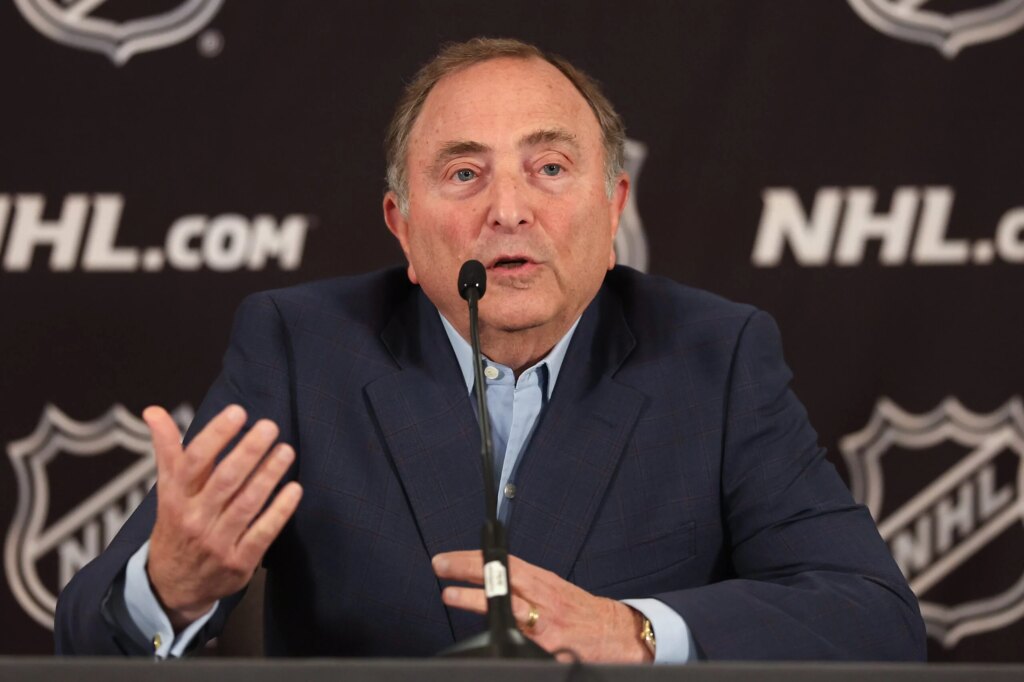
Every year or so, the same idea comes back around. Now, with constant talk of expansion and only so much talent to go around, the solution on offer is that the NHL should adopt promotion and relegation, the way European soccer and hockey do it, and its worst habits would sort themselves out. Teams would stop tanking. Fading markets would have something to play for in March. Every game in April would carry weight. THW made the case in 2017. The idea keeps coming back because the appeal is real. A club fighting to avoid the drop is better theater than a club losing on purpose for a lottery ball.
The problem is what it gets wrong about Europe.
European hockey has spent the last 15 to 20 years moving toward closed and semi-closed leagues, not away from them. The two biggest and richest leagues on the continent chose the NHL’s model on purpose. The KHL was built in 2008 to scrap Russia’s old promotion and relegation ladder and replace it with a franchise system modeled on the NHL, and it has stayed that way since. Germany’s DEL ran for more than two decades with no relegation at all, where the only way into the top flight was to buy a license. When a Swedish hockey site mapped the whole continent this spring, it found that HockeyAllsvenskan is now the only second division in a serious European hockey nation that still guarantees one automatic promotion a year. Everywhere else, a club that wants up has to pay its way, clear a licensing bar, or both.
Let me say this first, as someone who covers Finnish hockey and pushed for Liiga to reopen. Promotion and relegation is one of the greatest systems in the game for the fans. But it takes tons of money and infrastructure, and that is not always possible.
So the NHL is not rejecting the European way. It already runs the model European hockey has spent a generation drifting toward, or maybe it is the Europeans who have been drifting toward the North American one. Whether relegation is exciting was never the real question. Trust me, it is. The question is why the sport keeps locking its top leagues shut, and why the NHL is the one league of them all that could never open its own.
What Relegation Actually Does to a Club
So let’s take a look at Europe. It is a big place, and though most people think of Sweden and Finland when they think of European hockey, there are more countries with very healthy systems we can pull from. Relegation seems like the kind of thing American fans would eat up. I could see a Disney movie about taking a small-town team and bringing it to the top. Kind of ironic, but Americans have already eaten up that story in the soccer world with the Welcome to Wrexham series. The cost of relegation, though, is not just having a dream and being open, it is financial, and even at European scale, where no club is worth billions, it can come close to killing the team that goes down.
Sweden is a pretty good example. Dropping from the SHL to the second-tier HockeyAllsvenskan means falling into a different financial universe. The lower league’s national TV deal is worth around 100 million kronor a year, roughly $10 million, while the SHL works in billions. Public broadcaster SVT has documented near-fatal fallout at Leksand, Djurgården, and Timrå after they were relegated, clubs that employ people and anchor whole towns. The current case is Leksand, sent down in March 2026 while already in crisis. It was carrying tens of millions of kronor in debt, much of it bonuses still owed to players who had already left, and it leaned on a municipal loan guarantee to stay upright. Its own local coverage called the drop a 100-million-kronor blow. And here is the turn: the SHL used to hand relegated clubs a parachute payment of about six million kronor, and it scrapped that starting in 2024-25. The cushion is gone just as the fall has never looked more expensive. Worse, the fear of it pushes clubs to overspend chasing safety, which is how a team already bleeding money digs the hole deeper. Some fans will argue, “well, that just makes the stakes higher and more exciting.” Unfortunately, in business, excitement is often viewed as risk, and risk is avoided.
Switzerland makes the same admission a different way. The National League, the country’s top tier, is in one major daily’s words de facto closed. The relegation game still exists, but it has been tilted toward the top club until promotion is nearly unreachable, and the established teams refuse to give an inch rather than risk the drop. And during COVID, Swiss hockey simply suspended relegation for two seasons to keep clubs out of insolvency. A league that switches off relegation to protect its members is telling you what relegation is. A financial threat first, a fan favorite second.
None of the European leagues carry what the NHL carries. No franchise worth billions, no salary system bolted to league revenue, no contracts guaranteed to the last dollar. And relegation still scares them enough to gate it, cushion it, or quietly switch it off. Put that same mechanism inside the NHL, and look at what it hits.
The Owners’ Wall
The closed league survives, and Europe is shifting to it, because it is the most profitable feature the owners have, and not because anyone is sentimental about it. Which, yeah, is kind of a bummer.
Start with how the NHL grows. When a new team joins, the buyer pays an expansion fee, and that money does not go into the pool the players share. It is not counted as hockey-related revenue, so the players never see a cent of it. It splits evenly among the owners already at the table. NHLPA executive director Marty Walsh has made the point directly: Vegas paid $500 million to join, Seattle $650 million, and every dollar went to the existing owners while the players got none of it. The $2 billion Texas fee now on the table adds roughly $62.5 million to each of the 32 current owners’ accounts, again with nothing owed to the players.

The buyer is paying for a permanent, guaranteed seat in the league, and the scarcity of that seat is the whole product. More than half the league is now worth $2 billion or more, Toronto near $4.4 billion, and those numbers rest on the same promise: the team is a member for good, it draws a national-revenue share, it collects the next expansion windfall, and it cannot be dropped.
Relegation breaks all of it. You cannot sell a permanent seat for $2 billion and tell the buyer it might be yanked after one bad season. The two ideas cancel out. And even if some owner were willing, the bank would not be. Purchases at this scale run on borrowed money, and no lender signs a nine or ten-figure loan against an asset whose revenue can be halved by the standings. That is the whole of the objection: nobody pays $2 billion for a franchise, plus an arena that pushes the all-in bill toward $3.5 billion, only to risk falling to the minors in year two.
And that is the owners’ half. The players’ half is worse.
The Players’ Wall
If the owners would never allow relegation, the players would kill it twice over, because it attacks the one thing every NHL contract is built on. Certainty. Those sorts of words keep popping up in this piece. Uncertainty is what makes things exciting for fans, and it is exactly what the business is built to stamp out.
The system runs on a simple split. Players and owners divide hockey-related revenue down the middle, and that shared revenue sets the salary cap and the salary floor every season. The current CBA runs through 2030 and keeps the 50-50 split intact, with the cap climbing to $95.5 million in 2025-26 and $104 million in 2026-27. The number goes up because league revenue goes up. Reverse that, and the cap falls with it. It happened during COVID, when revenue cratered and the cap sat frozen for years.
Now drop relegation into that math. Send an NHL team down to a lower-revenue league and you pull its revenue out of the shared pool while adding a smaller-revenue club in its place. The total shrinks, and because the cap and floor are set from that total, they fall for all 32 teams, not just the one that went down. Every team’s ceiling drops, every team’s required spending drops, and the players absorb the loss leaguewide. They already carry that risk each season through escrow, the mechanism that holds back part of their pay to guarantee the owners’ half of the split. When revenue misses, players eat the difference. Relegation would be a permanent, self-inflicted miss.
Then there is the part that makes it worse than a soccer relegation ever could be. NHL contracts are guaranteed to the last dollar, which soccer deals are not. A relegated Premier League club renegotiates or sheds wages on the way down. A relegated NHL club would still owe every dollar on its books, in full, on revenue that no longer supports NHL salaries. That money does not evaporate. It becomes a debt the club cannot pay, and no player, and no union, signs up to have guaranteed contracts stranded that way.
The salary floor breaks the other direction at the same time. Every team has to spend a minimum, $70.6 million in 2025-26. A club just promoted from a lower league cannot leap to a $70 million payroll overnight, and a club just relegated cannot sustain one on a fraction of the revenue. This is the exact problem the Finns wrote into their own reform, a system built to protect clubs from the financial shock of moving between tiers. And Finland could attempt it only because it does not carry any of this, no revenue-linked cap, no guaranteed contracts at NHL scale, no franchise sold on permanence. The mechanism that makes relegation survivable in Finland is the mechanism the NHL was built without.
So the players just re-signed a rising cap through 2030. They have no reason on earth to trade guaranteed money and a climbing ceiling for a system that would drag both down and strand contracts doing it. The owners will not open the league. The players will not either. Which raises the obvious question, if the whole point was to stop teams from tanking, is relegation even the tool that does it?
Relegation Would Not Even Fix the Tanking
Another point. Strip away the money and the contracts, and relegation still would not do the job people want it for. A big argument I see is the effort to end tanking, and honestly, it does not even do that cleanly.
The NHL already fights tanking, and it has made two big efforts to fix it. Since the 2021 and 2022 rule changes, a team can move up no more than 10 spots in the draft lottery, so only the bottom 11 clubs can even land the first pick, and no team can win the lottery more than twice in five years. That last rule exists because Edmonton and New Jersey each won three times in a decade. The league saw chronic losing become a viable path to success and wrote a rule to stop it.
Relegation does not remove the incentive to lose, it just changes how it works. Instead of tanking for a lottery pick, a middling team plays not to drop, and aims for the safe gray middle of the table rather than the top. You trade teams bottoming out for teams refusing to reach, which is its own kind of dead hockey.
And there is a plainer problem underneath all of it. There is no second division to promote from. In Europe the pyramid is made of independent clubs that own themselves, so a champion below can rise into the money above. The NHL’s lower leagues do not work that way. The AHL and ECHL are development affiliates, owned or controlled by the NHL clubs themselves, stocked with prospects on their way up, not rival businesses competing for a top-flight seat. Promote the Texas Stars and you are promoting a team the Dallas Stars own, into a league where Dallas already plays. There is nothing to promote, because the thing you would promote belongs to the team above it.
A side note, as I am writing this: development leagues are almost a decent middle ground in the relegation world. You can watch a player rise from the AHL to the NHL. Maybe there needs to be a better pipeline between the ECHL, AHL, and NHL, but that is another discussion. You can still see your favorite player climb. I know it is not exactly the same, but in European leagues you often end up with these very short one or two-year contracts, and you root for the team without really rooting for any of the players.
If the real goal is to punish tanking, the tools already exist and do not require blowing up the league. The Gold Plan, already used by the PWHL, sets draft order by points earned after a team is eliminated from playoff contention, so a bad team has a reason to keep winning in March instead of a reason to lose. Keep tightening the lottery. Fix the incentive directly. That is a scalpel. Relegation is setting the building on fire to kill a draft.
None of which means the European model has nothing to teach the NHL. It has plenty. Just not this.
What the NHL Should Actually Take From Europe
So put relegation down and look at what is left, because the parts of the European model the NHL should copy were never the part that sends teams down. They are the parts that build teams up, and the feeling of seeing your town represented in some way.
European clubs make their own players. The best programs run proper academies, and Germany is the clearest example. Its clubs operate to a five-star standard with facility and staffing requirements that are not suggestions, its Eliteschule setup weaves school and training into the same day, and its top league protects young players with a rule that forces coaches to dress a set number of under-23 skaters. A generation later the results are on NHL rosters, Draisaitl, Seider, Stützle, Peterka, from a country that used to export almost no one. That is a club owning its own development from childhood, not outsourcing it and hoping. The NHL cannot import that wholesale, its pipeline runs through junior and college hockey it does not control, but it can push its clubs to invest deeper and earlier in the players they will one day want, and it can build the better ECHL-to-AHL-to-NHL pipeline that already lets a fan watch a prospect climb. Development is the honest version of the ladder people want, and the NHL already half-owns it.
That is what Europe actually offers a league like the NHL: a habit of growing the game from the ground, through clubs that develop their own players and markets that are ready before the team arrives. Relegation is the flashy import, the one that makes for a good movie and a good argument at the bar. It is also the one thing on the menu the NHL was built to reject, and the one European hockey is backing away from itself.
The uncertainty is the draw, it always has been. But the NHL is a business before it is a drama, and a business spends its money buying certainty, not selling it. If the league wants what relegation promises, competitive teams top to bottom and markets that mean something, it already knows where to spend. Not on a trapdoor under the standings, but on the players and the cities long before either one reaches the NHL.
I would also be remiss to pretend promotion and relegation is not exciting. It is. But instead of trying to make a chicken quack, maybe it is better to just get a duck. Look at leagues like Liiga and the SHL. They are full of great hockey and stories to follow in their own right. The timing can be tricky to keep up with across the ocean, so if you want a low-effort way to follow a Liiga club through a wild promotion-and-relegation super season in Finland, check out my Jokerit Card series. It tracks Jokerit week to week as the club climbs back to the top flight of Finnish hockey after years away, and it is built for a North American audience to follow easily.
Free Newsletter
Get NHL Expansion coverage delivered to your inbox
In-depth analysis, breaking news, and insider takes – free.